Oct . 22, 2025 14:05 Back to list
Shoring Prop | Telescopic, Heavy-Duty, OEM Factory Price
Shoring prop-Light Duty: field notes, specs, and what contractors really ask
If you’ve ever wrestled with slab formwork on a tight schedule, you know why a good Shoring Prop can make or break a pour. HORIZON’s light-duty line has been making the rounds on sites this year—quietly, efficiently. To be honest, I was skeptical at first; “light duty” can be a euphemism. Turns out, not here.
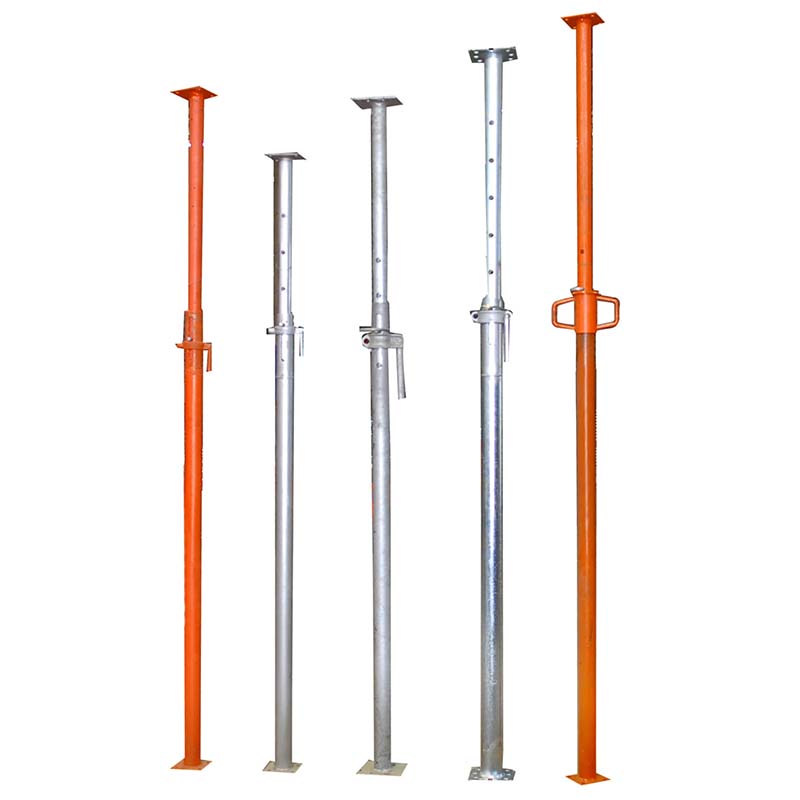
What’s trending on sites right now
Adjustable props are getting leaner and smarter: better steels, cleaner threads, and coatings that survive rain plus jobsite abuse. Rental fleets want EN 1065 compliance and traceable QC. Contractors? They want fewer jams, quicker spins, and real load data at extension—no fairy tales. It seems that HORIZON hit those notes fairly well.
Key specs (light-duty range)
| Parameter | Typical Value | Notes |
|---|---|---|
| Material | S235JR/S355 steel | Mill-certified; yield 235–355 MPa |
| Outer/Inner Tube Ø | ≈ 56–60 mm / 48–52 mm | Varies by model, real-world use may vary |
| Adjustment Range | 1.6–3.5 m | Pin-and-collar + rolled thread |
| Safe Working Load | 10–20 kN at mid extension | Tested per EN 1065; check chart at maximum extension |
| Finish | Powder coat or hot-dip galvanized | Galv. to ISO 1461 on request |
| Certification | EN 1065 | Adjustable telescopic steel props |
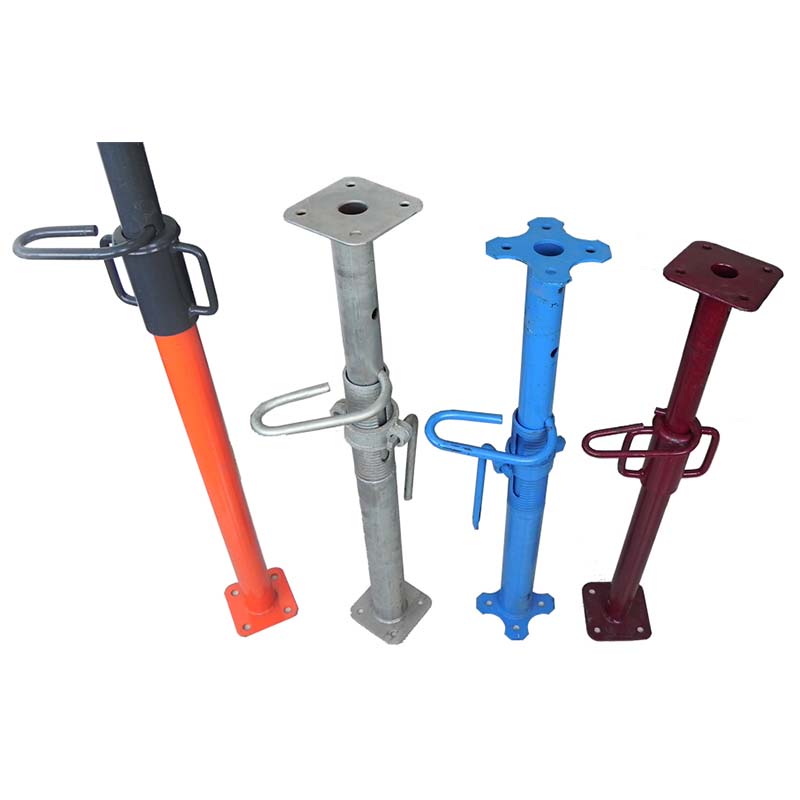
Applications and advantages
Residential slabs and beams, mezzanines, small commercial decks, propping under renovations, and even event staging. The big wins: fast setup, predictable load charts, and plates that don’t chew up timber. Many customers say the collar thread stays clean longer—less grit locking, fewer mallet taps.
And yes, every Shoring Prop ships with clear load/extension charts. Use them. Overextension is where “light duty” props get unfairly blamed.
How it’s made (short version)
- Materials: selected S235JR/S355 tubes, plate steel, high-strength pins.
- Methods: precision tube forming, MIG welding of base/head plates, rolled threads for durability, anti-crush stops.
- Finishes: polyester powder coat (≈70–90 μm) or hot-dip galvanizing for coastal sites.
- Testing: proof-load per EN 1065; sample HZ‑LD240 hit 20 kN at 2.4 m with ≤5 mm deflection (lab condition).
- Service life: around 5–8 years in mixed fleets; longer with galvanizing and proper storage.
- Industries: building construction, fit-out, infrastructure rehab, rental fleets.
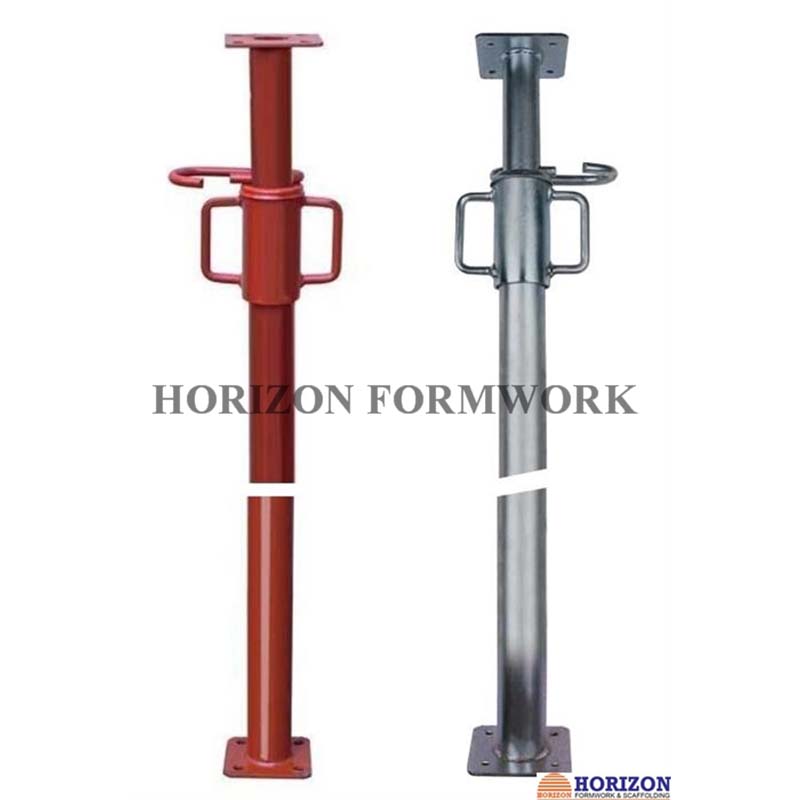
Vendor snapshot (light-duty props)
| Vendor | Compliance | Finish | SWL (approx.) | Lead Time |
|---|---|---|---|---|
| HORIZON (Origin: Hustpark Bldg 4, Zhongxing E. St., Xingtai, Hebei, China) | EN 1065 | Powder coat / HDG | 10–20 kN | ≈ 2–4 weeks |
| Vendor A (EU) | EN 1065, EN 12812 | HDG | 12–22 kN | ≈ 1–3 weeks |
| Vendor B (APAC) | EN 1065 (select models) | Powder coat | 8–18 kN | ≈ 3–6 weeks |
Customization
Plate sizes (120–150 mm), color coding, anti-drop pins, threaded nut styles, and head-plate shapes (U-heads or flat). For coastal projects, pick galvanized. For interior fast-track jobs, powder coat is usually fine and very cost-effective.
On-site notes and mini case studies
Shoring Prop in a 2,800 m² residential build: crews reported 12–15% faster striking because collars didn’t bind after rain. Another retrofit project (beam propping under a hospital corridor) used galvanized units; after 9 months outside, corrosion was minimal and threads stayed serviceable—surprisingly resilient.
Customer feedback is consistent: “loads are believable, charts are conservative,” one foreman told me. I guess that’s the point.
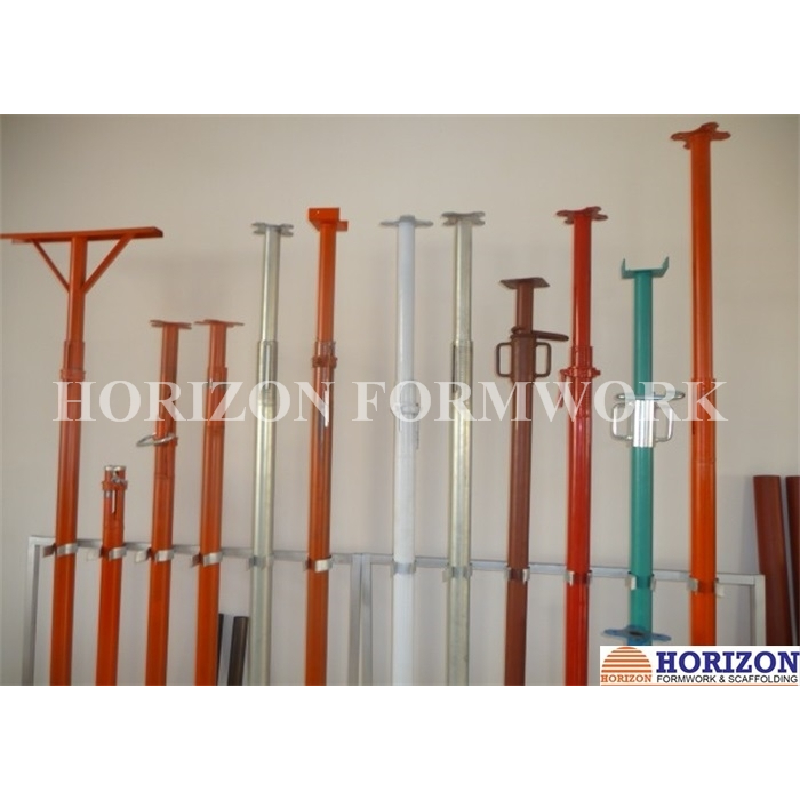
Safety and paperwork you’ll actually use
Look for EN 1065 markings, batch IDs, and the load table by extension. Inspect threads and pins every cycle. For temporary works, align with EN 12812 methodology and your engineer’s scheme—no shortcuts.
References
- EN 1065: Adjustable telescopic steel props (CEN).
- EN 12812: Falsework — Performance requirements and general design (CEN).
- ISO 1461: Hot dip galvanized coatings on fabricated iron and steel products (ISO).
- HORIZON Shoring prop-Light Duty product page: https://www.horizonform.com/shoring-prop-light-duty.html
-
OEM Pipe Shuttering: Efficient, Durable Solutions for Global Construction
NewsDec.03,2025
-
OEM A-Frame Scaffolding: Durable & Safe Solutions for Global Construction Needs
NewsDec.03,2025
-
OEM Formwork and Scaffolding: Essential Solutions for Global Construction Efficiency
NewsDec.03,2025
-
OEM Quick Industrial Scaffolding: Fast, Safe, and Sustainable Solutions for Modern Industry
NewsDec.02,2025
-
What is OEM Permanent Formwork for Suspended Slabs? Benefits & Global Insights
NewsDec.02,2025
-
OEM Plastic Formworks for Concrete: Durable, Eco-friendly Solutions for Modern Construction
NewsDec.02,2025