Oct . 27, 2025 12:15 Back to list
Timber Beam H20: Durable, Precise, Cost‑Saving Formwork
Field notes on formwork workhorses: the Timber Beam H20
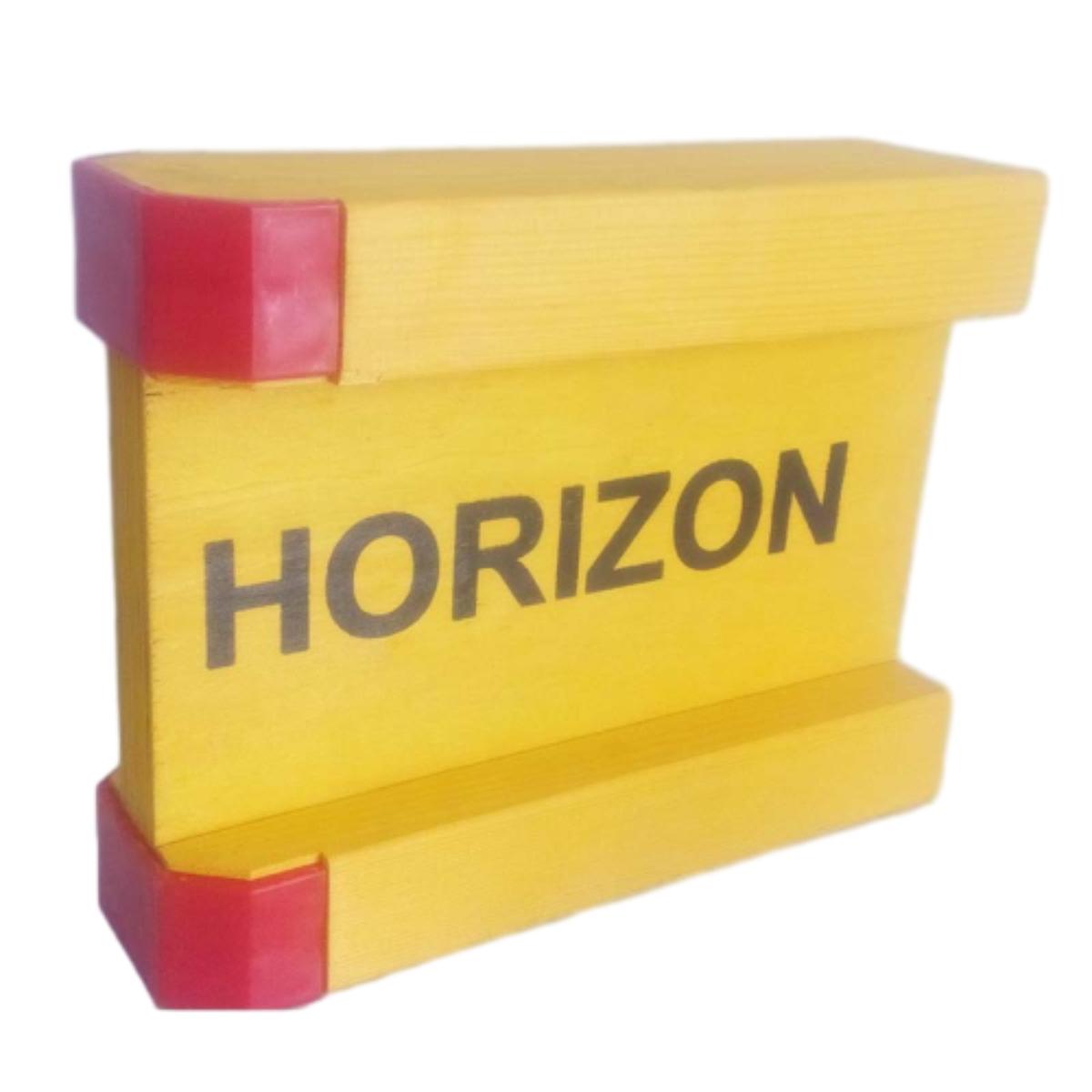
I’ve been on enough pours to know a humble timber beam can save a schedule. Lately, contractors keep telling me the same thing: for walls, columns, and slabs, the Timber Beam H20 hits that sweet spot of price, strength, and speed. It’s not flashy—just reliably gets the job done, especially on tricky basements or long runs of repetitive wall heights.
What’s driving the trend
Two themes: sustainability and labor risk. Timber formwork beams are lighter than steel walers, reduce crane time, and—if they’re sealed properly—can cycle hundreds of times. In fact, many customers say their crews move faster with the Timber Beam H20 because it’s easier on the body and pairs well with both traditional plywood and aluminum panel systems.
Quick specs (real-world values, not brochure promises)
| Parameter | Typical value (≈) |
|---|---|
| Overall depth | 200 mm |
| Chord (flange) size | ≈ 80 × 40 mm, finger-jointed spruce/pine |
| Web | 3-ply timber, ≈ 27 mm, water-resistant bond |
| Weight | ≈ 4.6–4.9 kg/m (real-world may vary) |
| Bending moment capacity | ≈ 5.0 kNm (characteristic) |
| Shear force | ≈ 11 kN |
| MOE (Emean) | ≈ 10,000 N/mm² |
| Lengths | 2.45–5.90 m (custom cuts available) |
| Reuse cycles | 200–300+ with proper handling and edge caps |
How it’s built (and tested)
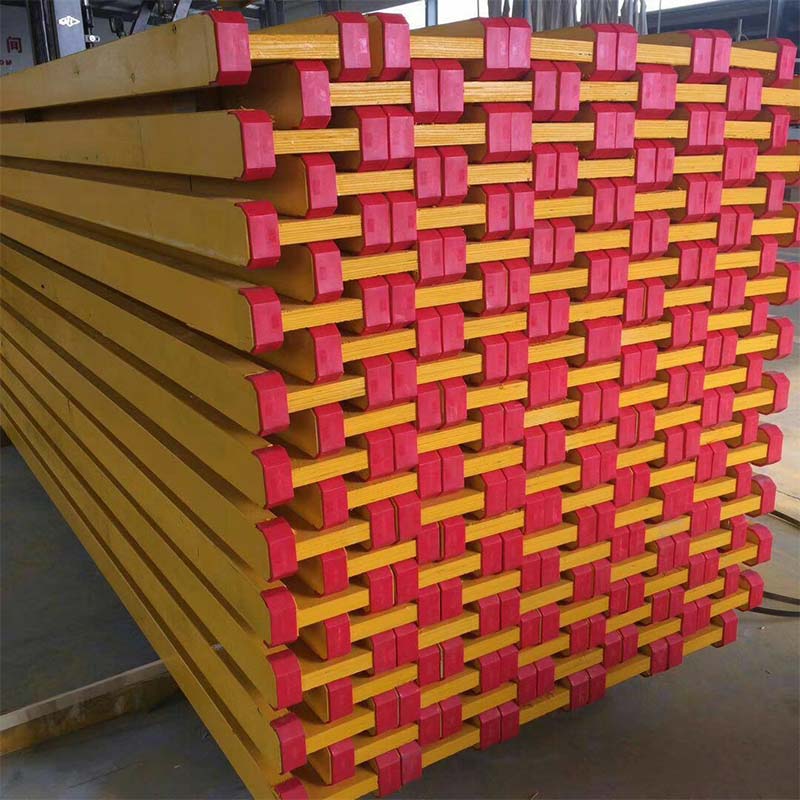
Materials: selected softwood chords, finger-jointed; 3‑ply web; adhesive per EN 301; edges sealed. Methods: CNC trimming, high-pressure gluing, quality curing, and full-length visual checks—plus random sample load tests. Testing standards typically reference EN 13377 (formwork beams), EN 408 (structural timber test methods), and factory QMS under ISO 9001. Service life? I’d say 6–8 years on mixed-use fleets if storage and de-nailing are disciplined.
Where it shines
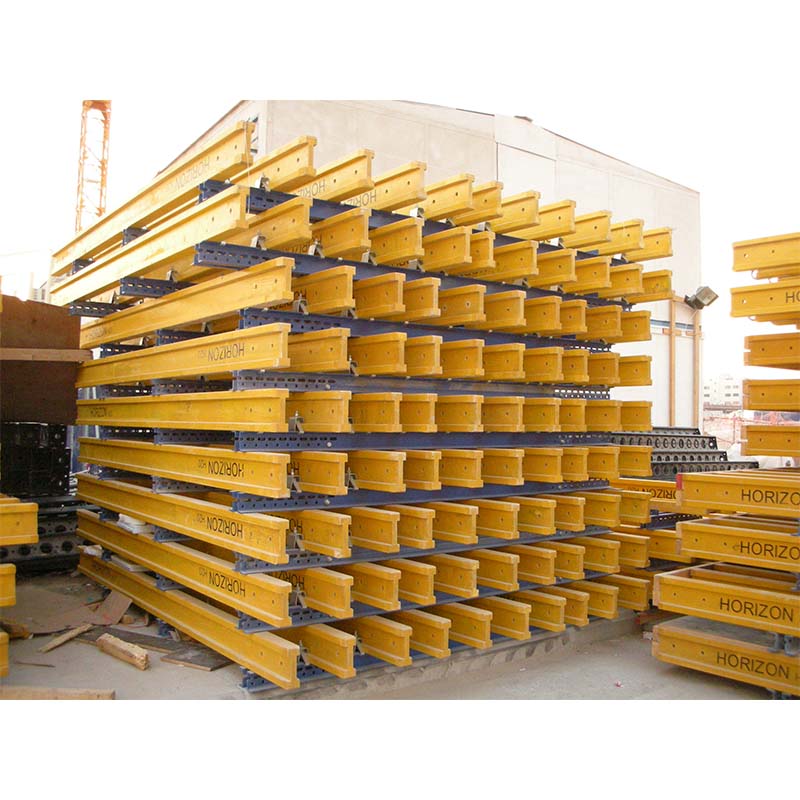
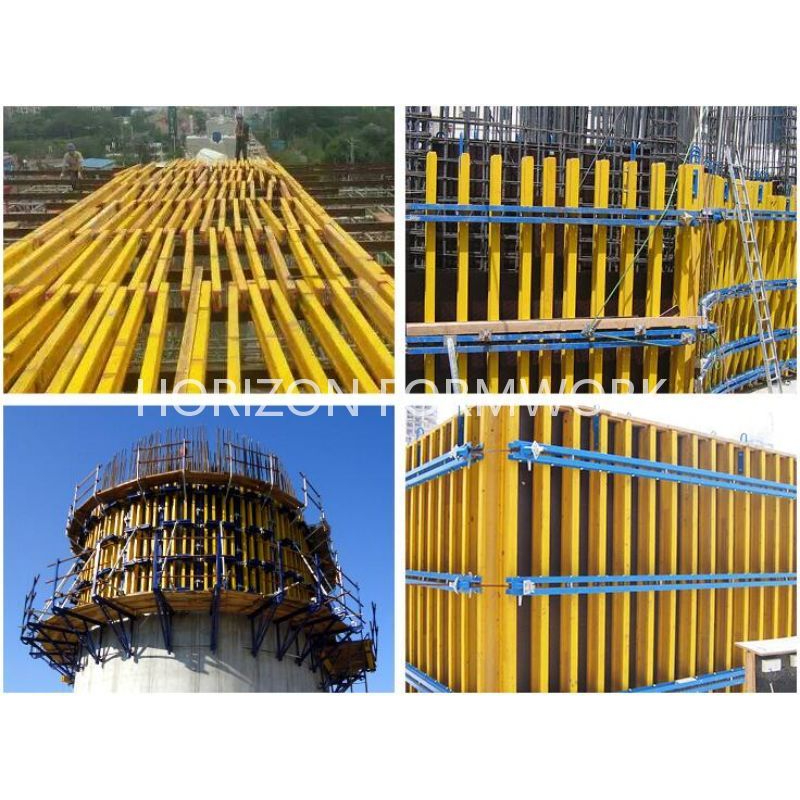
- Wall/column formwork on residential and mid‑rise commercial
- Slab tables and shoring with cup-lock or aluminum frames
- Complicated basements, transfer slabs, and raft foundations
- Infrastructure: stations, culverts; energy: tanks and cooling towers
Advantages: light handling, predictable deflection, fewer crane picks, and an economical alternative when steel prices spike. Also, contractors like the forgiving nature—drop a steel waler and you dent concrete; drop the Timber Beam H20 and you mostly scuff paint.
Vendor snapshot (indicative)
| Vendor | Depth | Weight ≈ kg/m | Bending ≈ kNm | Certs | Notes |
|---|---|---|---|---|---|
| Horizonform | 200 mm | 4.6–4.9 | ~5.0 | ISO 9001, CE (EN 13986) | Good price-to-cycle ratio |
| EU Brand X | 200 mm | ~5.0 | ~5.0–5.5 | EN 13377, FSC | Premium finish; higher cost |
| Regional Y | 200 mm | ~4.7 | ~4.6–4.9 | ISO 9001 | Economy; check QC batch-to-batch |
Customization and logistics
Options: branded end caps, color-coded sealing, custom lengths, flame-retardant coatings, and FSC-certified wood on request. Origin: Hustpark Building No. 4, Zhongxing East Street, Xingtai, Hebei, China. For safety, I always remind crews: observe OSHA 1926.703 or equivalent local rules when flying tables or reshoring—simple, but it prevents headaches.
Real-world notes
- Guangzhou contractor reported 280+ uses on slab tables—minor web scuffs, no structural rejects.
- Metro station pour: switching to the Timber Beam H20 lowered crane picks by ≈12% vs heavier steel sections.
- Mid‑rise in Manila: form face quality improved after crews adopted end-cap discipline and storage racks.
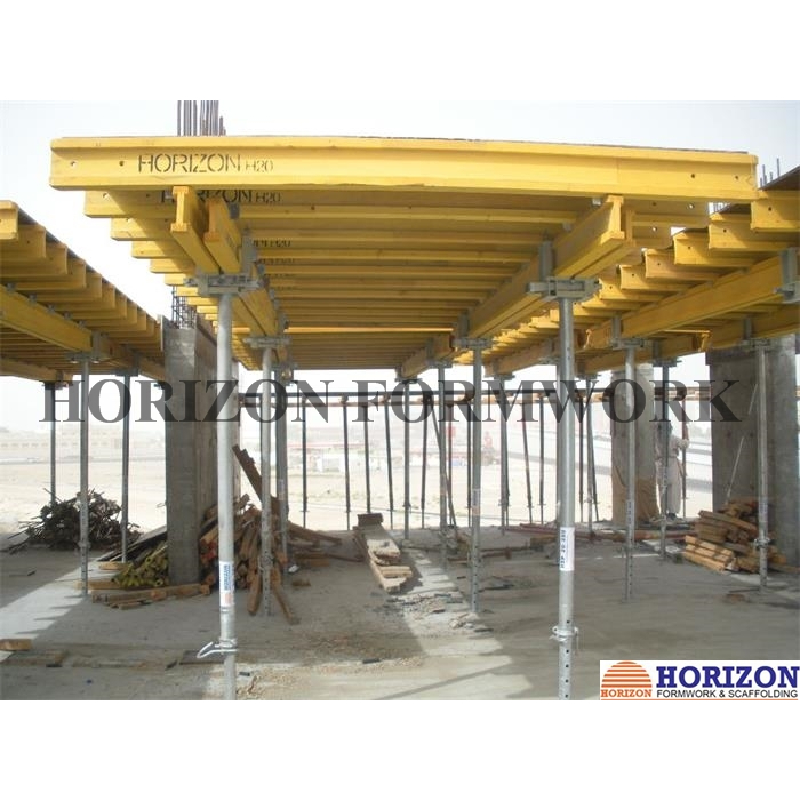
Bottom line
If you need an economical, durable beam for wall, column, and slab work—especially with repetitive heights—the Timber Beam H20 is a safe, proven pick. Not perfect (what is?), but in today’s cost and labor climate, it’s honestly tough to beat.
Authoritative citations
- EN 13377: Timber formwork beams—Requirements, classification, and assessment.
- EN 408: Timber structures—Structural timber and glued laminated timber—Determination of some physical and mechanical properties.
- EN 301: Adhesives, phenolic and aminoplastic, for load-bearing timber structures.
- EN 1995-1-1 (Eurocode 5): Design of timber structures—General rules.
- OSHA 1926.703: Requirements for formwork and shoring (USA).
-
OEM Pipe Shuttering: Efficient, Durable Solutions for Global Construction
NewsDec.03,2025
-
OEM A-Frame Scaffolding: Durable & Safe Solutions for Global Construction Needs
NewsDec.03,2025
-
OEM Formwork and Scaffolding: Essential Solutions for Global Construction Efficiency
NewsDec.03,2025
-
OEM Quick Industrial Scaffolding: Fast, Safe, and Sustainable Solutions for Modern Industry
NewsDec.02,2025
-
What is OEM Permanent Formwork for Suspended Slabs? Benefits & Global Insights
NewsDec.02,2025
-
OEM Plastic Formworks for Concrete: Durable, Eco-friendly Solutions for Modern Construction
NewsDec.02,2025