Oct . 06, 2025 09:00 Back to list
China single sided wall formwork: fast, safe, customizable?
Field Notes on Single-Side Wall Formwork from China: What’s Working Now
If you’ve been hunting for reliable china single sided wall formwork, you’ve probably noticed the market has quietly leveled up. Less talk about glossy catalogs, more about load charts, anchor test data, and lead times that don’t slip. In fact, much of the action is in systems that are simple, robust, and genuinely modular—no drama on site, just pours that go as planned.
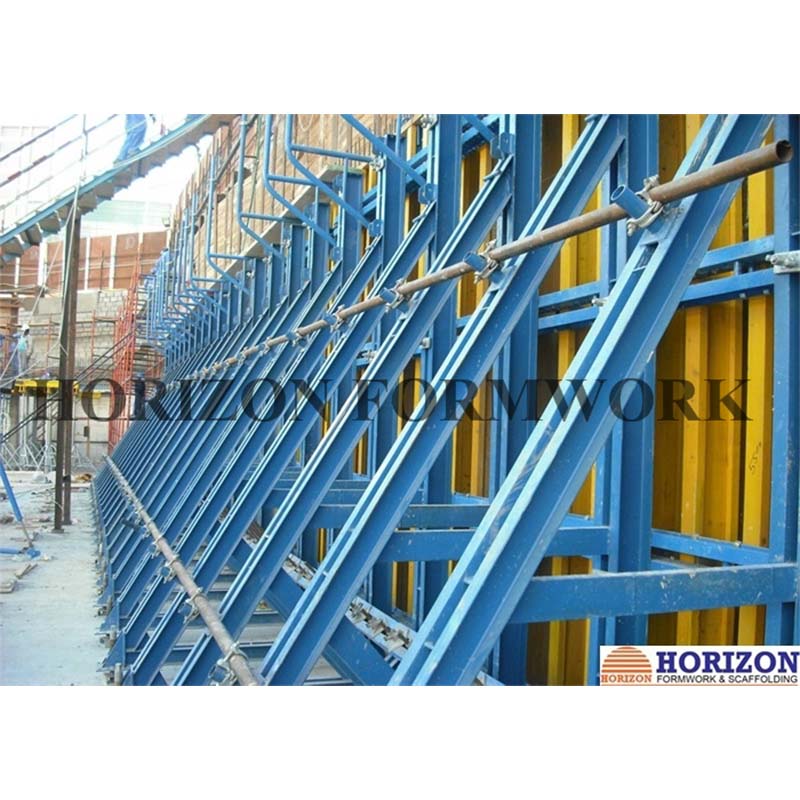
Quick Overview: HORIZON Single-Side Wall Formwork
Origin: Hustpark Building No. 4, Zhongxing East Street, Xingtai, Hebei, China. The HORIZON Single-side bracket is built around a core stack: base frame, lower frame, upper frame, and standard frame—height extension up to 8.9 m, which covers most basement and retaining wall scenarios. To be honest, the appeal is its predictable behavior under pressure and the tidy anchor layout.
| System height | Up to 8.9 m (stacked frames) |
| Core components | Base, lower, upper, standard frames; walers; anchors |
| Materials | High-strength structural steel (commonly Q235B/Q345B) |
| Surface finish | Zinc-rich primer + powder coat, or hot-dip galvanizing (optional) |
| Design pressure | Typically up to 60–80 kN/m² with proper anchoring and pour rates |
| Anchor pull-out tests | Factory trials often ≥120 kN per anchor (per method; verify on project) |
| Service life | ≈ 8–12 years with routine inspection and coating maintenance |
Process Flow and Testing
- Materials in, mill certs checked (EN 10204 3.1 or equivalent).- Precision cutting and MIG/MAG welding, followed by weld dye-penetrant checks in critical nodes.
- Surface prep SA 2.5, then coating; dry film thickness logged per batch.
- Load verification on assembled frames; anchor pull-out testing per method statements.
- Conformance checks to EN 12812 (falsework) and ACI 347 guidelines, plus GB 50204 acceptance rules.
Many customers say the inspection logs are what win them over. I guess paperwork isn’t glamorous, but it saves headaches when pours approach design limits.
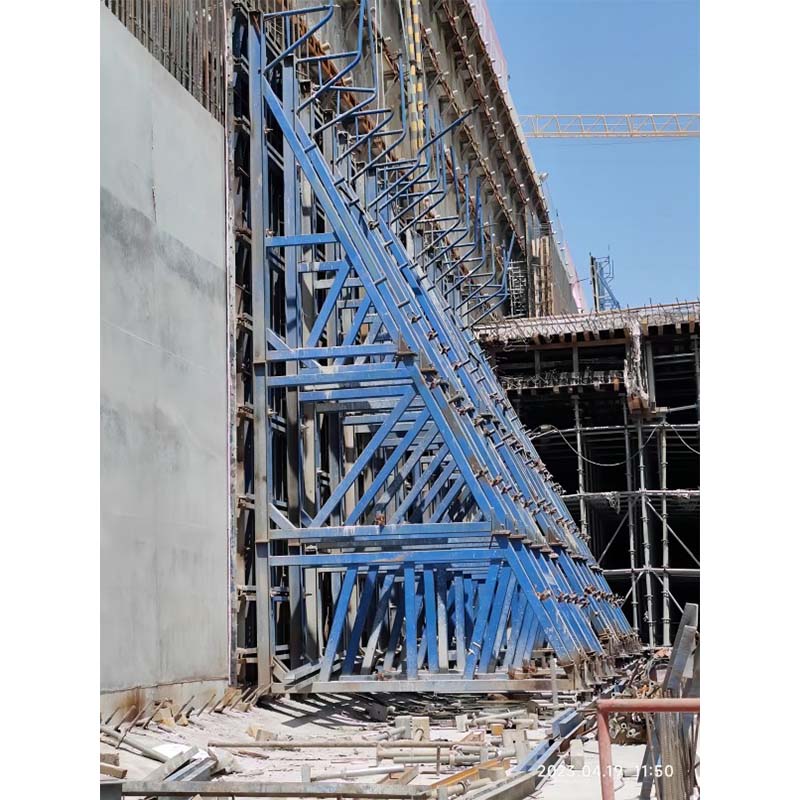
Where It Excels
- Deep basements and retaining walls where back anchoring is feasible but rear support is limited.
- Water-treatment tanks and culverts (controlled pour rates).
- Shafts and core walls with access on one side only.
Advantages include fewer components, faster crane cycles, and tidy alignment control. With china single sided wall formwork, the sweet spot is repeatable geometry and predictable anchor lines.
Vendor Snapshot (Selection Factors)
| Vendor | Height capacity | Typical load rating | Certifications | Lead time | Price band |
|---|---|---|---|---|---|
| HORIZON | Up to 8.9 m | ≈60–80 kN/m² (project-specific) | ISO 9001; CE where applicable | ≈ 3–6 weeks | $$ |
| Regional OEM A | Up to 7.5 m | ≈50–65 kN/m² | ISO 9001 | ≈ 4–8 weeks | $ |
| Global Brand B | Up to 10 m | ≈70–90 kN/m² | ISO 9001; CE | ≈ 6–10 weeks | $$$ |
Customization and Support
HORIZON offers anchor layouts tailored to wall thickness, cast-in plates, and rebar congestion; BIM-based shop drawings; and onsite training on first pour. With china single sided wall formwork, I always ask for anchor test packs and pour-rate guidance—small details, big payoff.
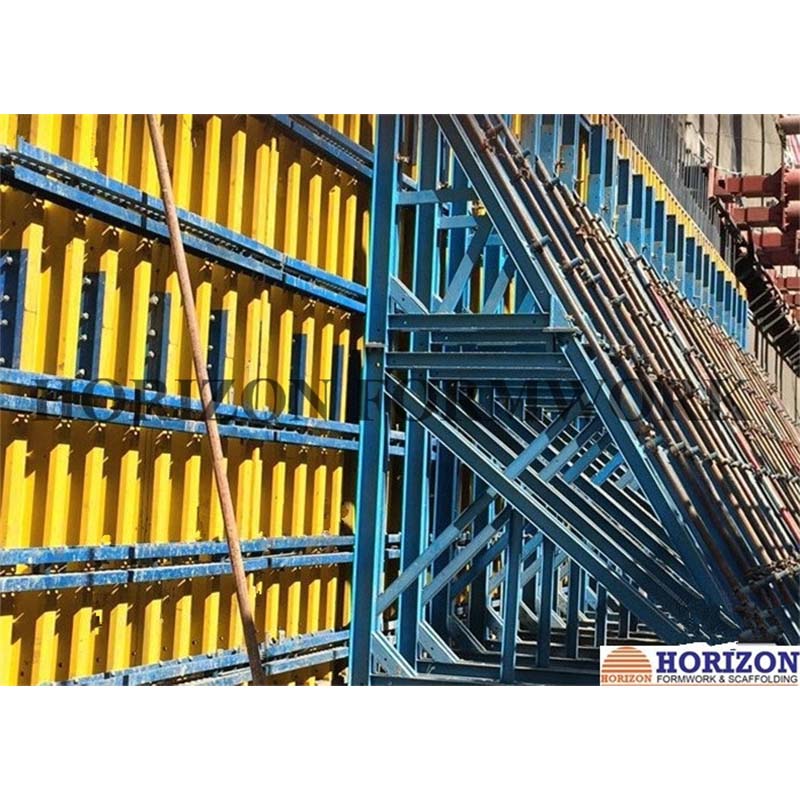
Project Snapshots (Anonymized)
- Northern China wastewater upgrade: 6.5 m tank walls, pour rate throttled to manage pressure; anchors verified ≥120 kN. Crew said setup was “surprisingly straightforward.”
- Southeast Asia metro box: 7.2 m retaining wall, staggered pours; fewer crane picks versus older system. Schedule held, which in this market is gold.
Typical feedback: alignment stays true, anchors bite well, and the learning curve is short.
Standards and Compliance
Designed in line with EN 12812 (falsework), guidance from ACI 347 on formwork pressures, and Chinese GB 50204 acceptance criteria; steel formwork guidance per JG/T 331. Always verify local codes and site-specific engineering, of course.
References:
1. EN 12812: Falsework – Performance requirements and general design.
2. ACI 347-04/347.2R: Guide to Formwork for Concrete.
3. GB 50204-2015: Code for Acceptance of Construction Quality of Concrete Structures.
4. JG/T 331: Steel Formwork (PRC industry standard).
-
OEM Pipe Shuttering: Efficient, Durable Solutions for Global Construction
NewsDec.03,2025
-
OEM A-Frame Scaffolding: Durable & Safe Solutions for Global Construction Needs
NewsDec.03,2025
-
OEM Formwork and Scaffolding: Essential Solutions for Global Construction Efficiency
NewsDec.03,2025
-
OEM Quick Industrial Scaffolding: Fast, Safe, and Sustainable Solutions for Modern Industry
NewsDec.02,2025
-
What is OEM Permanent Formwork for Suspended Slabs? Benefits & Global Insights
NewsDec.02,2025
-
OEM Plastic Formworks for Concrete: Durable, Eco-friendly Solutions for Modern Construction
NewsDec.02,2025