Oct . 02, 2025 12:55 Back to list
Timber Beam H20: Lightweight, Durable—Best for Formwork?
Field Notes on the Workhorse: timber beam h20
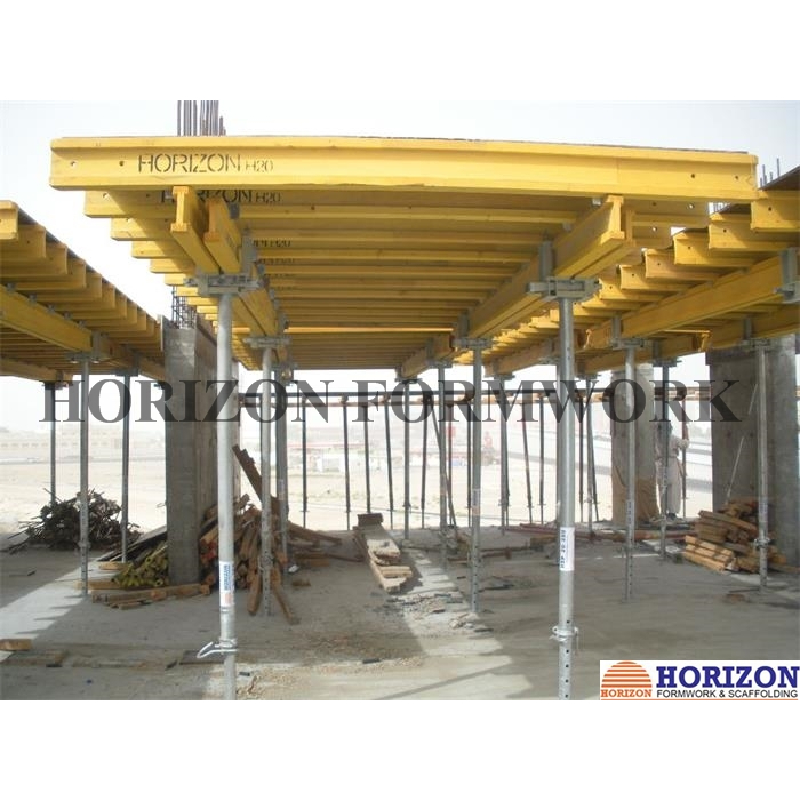
I’ve walked more slabs and muddy basements than I care to admit, and one constant keeps popping up on well-run sites: a clean stack of H20s, edges sealed, ends painted, numbers stenciled. The timber beam h20 is the unflashy backbone of wall, column, and slab formwork—especially when jobs get weird with complicated ground levels or repetitive cores.
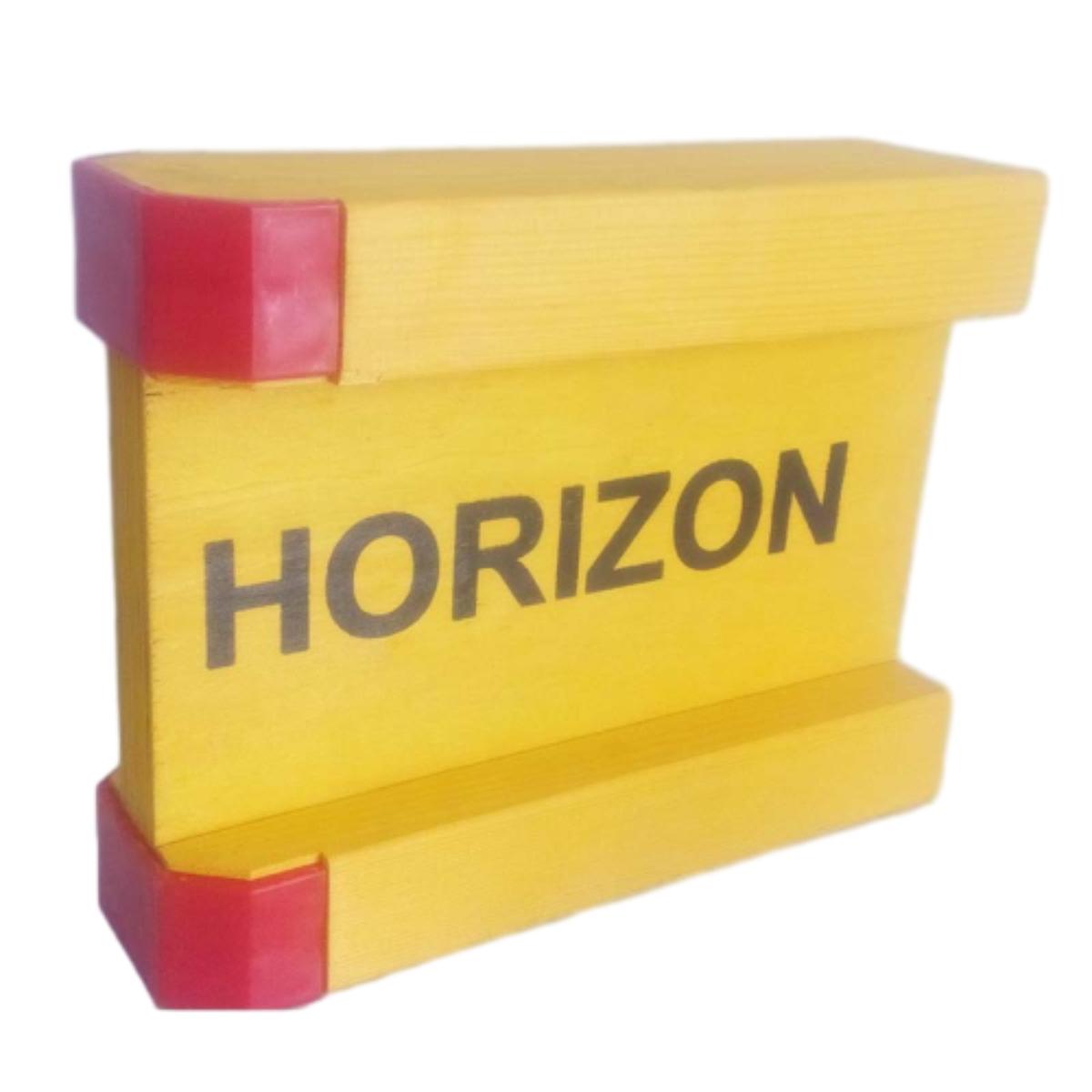
What it is, and why crews still love it
In simple terms, it’s a 200 mm deep engineered timber beam with solid-wood flanges and a high-grade web, factory-glued and pressed. It’s economical, forgiving, and—surprisingly—quiet under impact compared with steel. Many customers say they keep choosing it because it blends strength with familiarity. And, to be honest, when you’re chasing cycle times, familiarity matters.
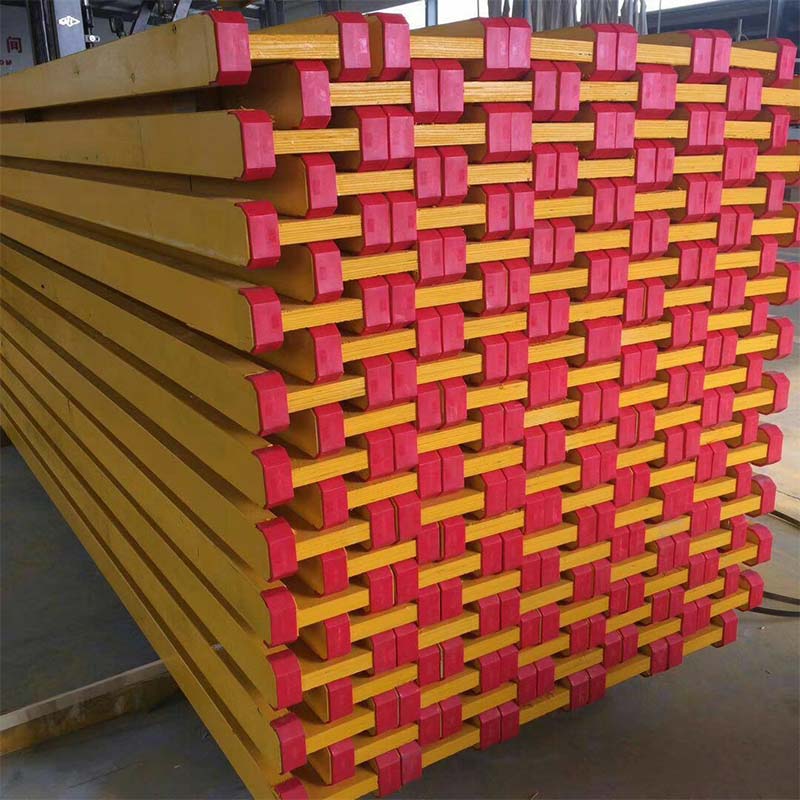
Core specs (typical)
| Overall height | 200 mm |
| Flanges | Solid spruce/pine, ≈80×40 mm, finger-jointed, PU/D4 adhesive |
| Web | ≈27 mm 3-ply plywood or LVL, WBP glue |
| Lengths | 2.45–6.0 m (step 0.2 m); custom on request |
| Weight | ≈4.5–5.0 kg/m (real-world use may vary) |
| Permissible bending moment | ≈5.0 kN·m (per EN 13377 methods) |
| Permissible shear force | ≈11 kN |
| E-modulus | ≈10,000 N/mm² |
| Moisture content | 12% ±2% |
| Finish | Water-repellent varnish, sealed/painted ends |
| Service life | ≈150–300 reuses; 5–8 years with care |
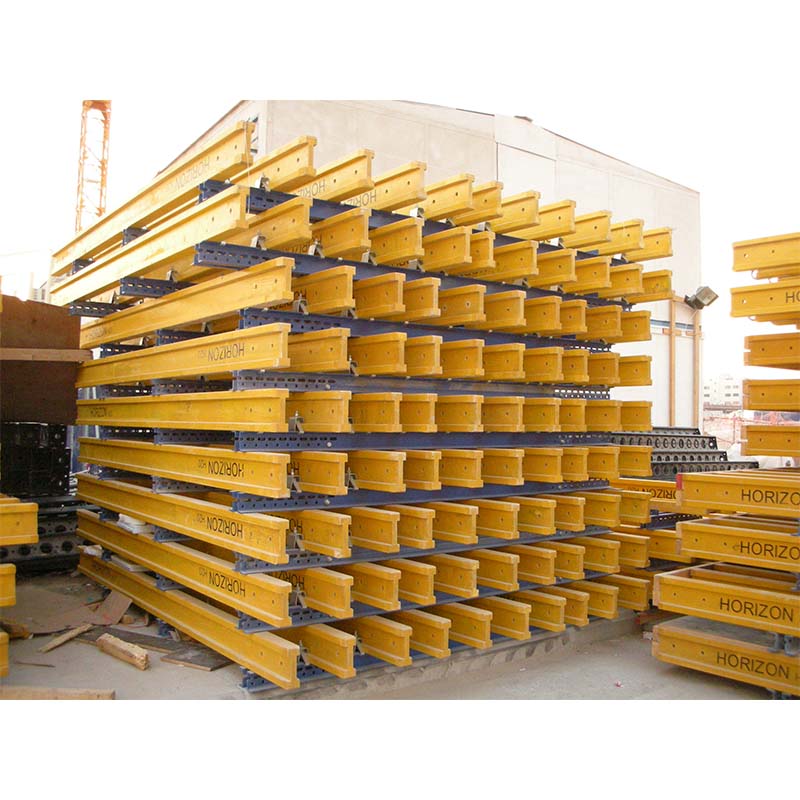
Process flow, testing, and QC
Materials: graded spruce/pine flanges (EN 14081/EN 338 classes), calibrated plywood/LVL web, D4/PU adhesives. Methods: finger-jointing, web-to-flange bonding, hot pressing, end sealing, logo/stencil. Testing: bending and shear per EN 13377; stiffness per EN 408; adhesive bond checks; moisture and dimensional tolerances; surface coating abrasion. Certifications often include ISO 9001 and FSC/PEFC when required. Typical service checks: periodic visual inspection for splits, crushed ends, and swelling after rain—don’t skip that.
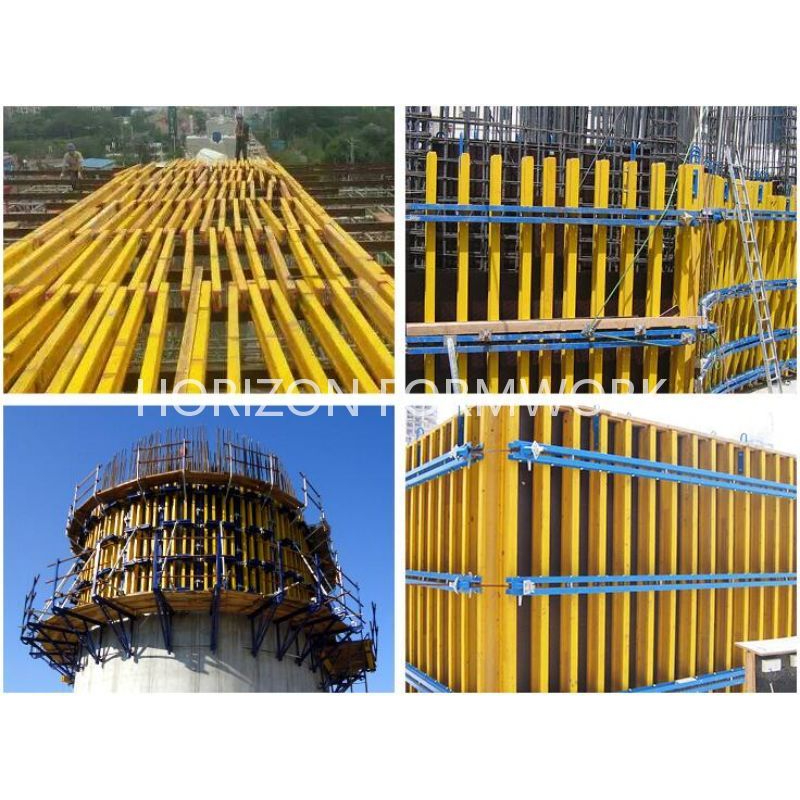
Where it shines
- Slab tables and traditional slab shores
- Wall and column panels (steel or aluminum walers)
- Basement pours with fiddly offsets; repetitive tower cores
- Infrastructure decks where weight and handling speed matter
Industries: commercial, residential high-rise, industrial plants, infrastructure. Origin for the Horizon unit I reviewed: Hustpark Building No. 4, Zhongxing East Street, Xingtai, Hebei, China.
Vendor snapshot (real-world buyer notes)
| Vendor | Compliance | Lead time | Price level | Customization | Notes |
|---|---|---|---|---|---|
| Horizon (China) | EN 13377, ISO 9001 | ≈3–5 weeks | Economy | Lengths, branding, end caps | Good cost-to-performance, stable QC |
| EU Premium Brand | EN 13377, EN 14080 | Stock/quick | High | Extensive | Top finish, strong documentation |
| Local Mill | Varies | Fast | Mid | Limited | Check test reports carefully |
Customization tips
Ask for sorted length mixes (e.g., 2.65/2.90/3.30 m) to reduce site cutting. Branding helps stock control. End protectors are worth it if you move beams with telehandlers a lot. Coating color is cosmetic, but the sealing quality is not—push for thicker end paint.
Case snapshots (from my notebook)
- Basement maze, 3.5 m height: crew cut cycle time by ≈12% switching to timber beam h20 + drop-heads, thanks to weight and handling.
- Repetitive hotel floors: ≈220 reuse cycles before culling 8% of stock (mostly crushed ends). Maintenance logs mattered.
- Bridge deck pour in winter: beams held dimensions after two freeze-thaw events; moisture checks stayed within 14%.
A quick caution
Follow load tables, don’t over-nail near the flange edges, and retire any beam with split flanges or delamination. It’s boring advice, but it keeps accidents out of the news.
References
- EN 13377: Prefabricated timber formwork beams — Requirements, testing, marking.
- EN 408: Timber structures — Structural timber and glued laminated timber — Determination of some physical and mechanical properties.
- EN 14080: Glued laminated timber — Requirements.
- ISO 9001: Quality management systems — Requirements.
- EN 1995-1-1 (Eurocode 5): Design of timber structures.
-
OEM Pipe Shuttering: Efficient, Durable Solutions for Global Construction
NewsDec.03,2025
-
OEM A-Frame Scaffolding: Durable & Safe Solutions for Global Construction Needs
NewsDec.03,2025
-
OEM Formwork and Scaffolding: Essential Solutions for Global Construction Efficiency
NewsDec.03,2025
-
OEM Quick Industrial Scaffolding: Fast, Safe, and Sustainable Solutions for Modern Industry
NewsDec.02,2025
-
What is OEM Permanent Formwork for Suspended Slabs? Benefits & Global Insights
NewsDec.02,2025
-
OEM Plastic Formworks for Concrete: Durable, Eco-friendly Solutions for Modern Construction
NewsDec.02,2025