Oct . 28, 2025 12:50 Back to list
Wall Formwork: Fast, Flexible, OEM & Curved Systems
A Field-Tested Take on Wall Formwork You Can Actually Build With
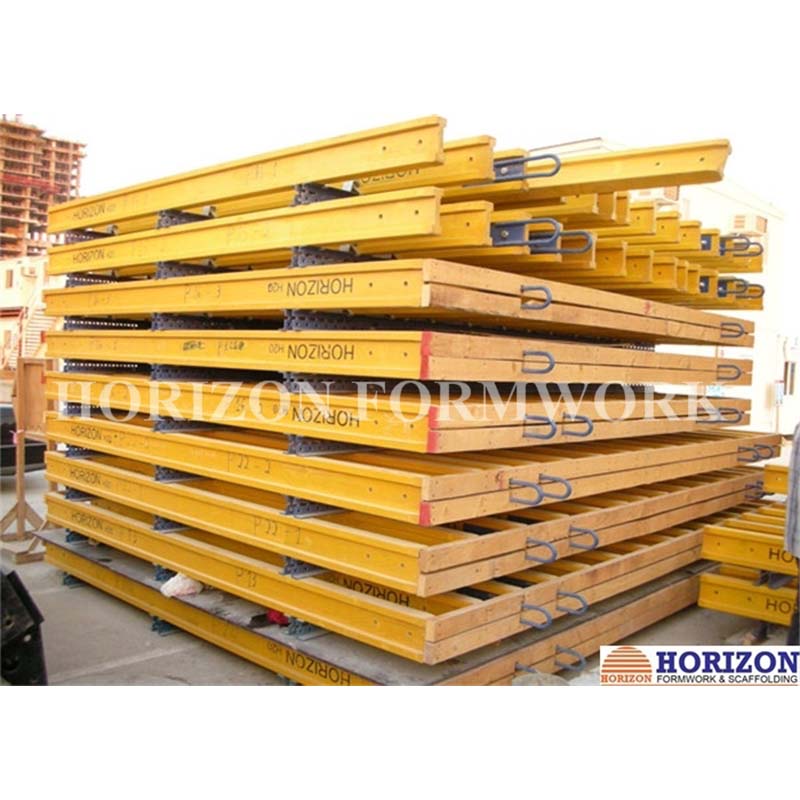
On sites where schedules pinch and pour windows shrink, good formwork is the quiet hero. I’ve watched crews switch systems mid-project—painful—so when a kit shows up that’s flexible, durable, and forgiving to real-world conditions, it gets noticed. Horizon’s system—timber beam H20, steel waling, film-faced plywood, clamps and ties—leans into that idea: fewer parts, more combinations. To be honest, that’s what most foremen ask for.
What’s changing on sites
Three trends keep coming up in my notes: higher fresh-concrete pressures as pump rates climb, faster reconfigurations as architects tweak cores late, and traceable quality—contractors now want data not just brochures. Wall Formwork that handles ≈60–80 kN/m², shifts quickly between lifts, and comes with clean documentation is winning bids. BIM-ready part codes and QR-tagged components? Not a gimmick anymore—just practical.
Key specs at a glance
| Primary components | H20 timber beams, steel walers, film-faced plywood, clamps, tie rods/anchor cones |
| Allowable fresh concrete pressure | ≈70 kN/m² (real-world use may vary with pour rate/temp/slump) |
| Plywood | Birch/poplar film-faced, 12–18 mm, EN 636/EN 314-2 compliant |
| H20 beam | Height 200 mm, finger-jointed flanges, ≈5.0 kg/m, edge-sealed |
| Tie system | Ø15/17 mm bars, cones/washers per ACI 347 guidance |
| Panel width range | Around 0.3–2.4 m (modular), heights up to typical story in one lift |
| Finish class | Up to architectural finish with fresh faces and correct release agent |
| Typical reuse cycles | Plywood 30–50, H20 beams 5–8 years with care; walers far longer |
Applications and methods
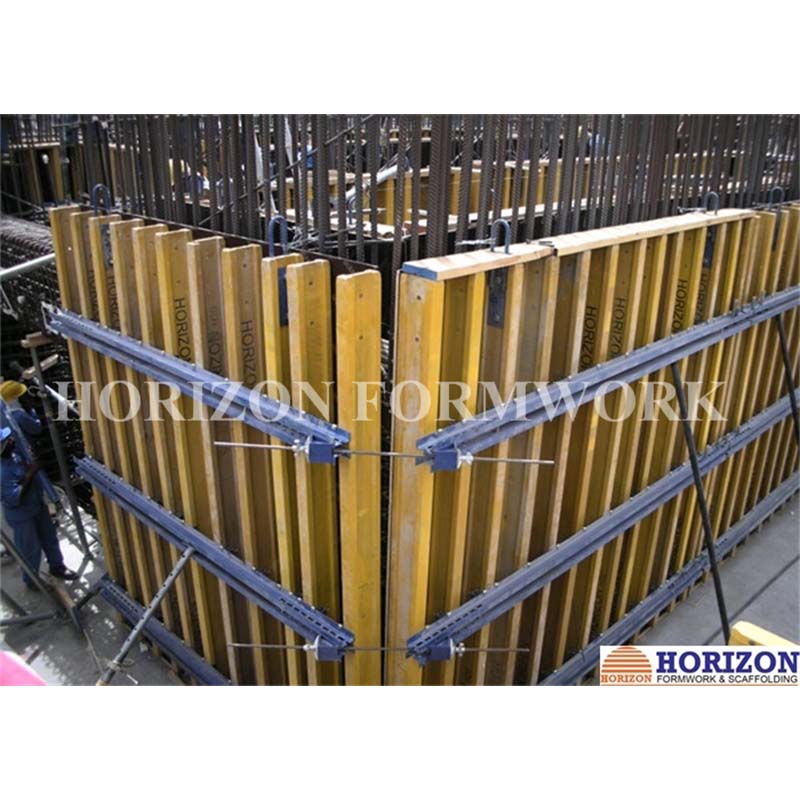
Wall Formwork here slots into shear walls, cores, tanks, culverts, and even curved segments (with segmented plywood). Crews pre-assemble panels with H20 spacing per pressure tables, clamp to steel walers, set ties/cones, plumb/brace, and pour. After stripping, you can reconfigure units—helpful when architects change a window band on Friday (it happens).
Testing, standards, and service life
- Structural checks follow EN 12812 (falsework) principles and ACI 347 pour pressure methods.- Plywood bond quality: EN 314-2; panel spec: EN 636.
- Dimensional tolerances often cross-checked to DIN 18202 classes when finish matters.
With good storage and edge sealing, I’ve seen H20 beams last ~7 seasons; film-faced sheets 35–40 reuses on mid-rise work, more if rotated and cleaned religiously. ISO 9001-backed QC helps keep batches consistent.
Vendor comparison (field-notes style)
| Vendor | Pressure rating | Weight | Certs | Lead time | Notes |
|---|---|---|---|---|---|
| Horizon | ≈70 kN/m² | Around 25–35 kg/m² | ISO 9001, EN-compliant components | 3–5 weeks typical | Strong customization; responsive tech sheets |
| Vendor B | ≈60 kN/m² | 30–38 kg/m² | ISO 9001 | 6–8 weeks | Budget-friendly; fewer panel sizes |
| Vendor C | 80+ kN/m² | 35–45 kg/m² | ISO 9001, CE docs | 8–12 weeks | Premium hardware; higher capex |
Customization and logistics
Need odd radii, pilaster steps, or embedded box-outs? Horizon will pre-assemble or ship loose for local jigging. Origin is Hustpark Building No. 4, Zhongxing East Street, Xingtai, Hebei, China—handy for rail to port. Many customers say the packing lists are clear; fewer missing cones equals fewer phone calls, which I appreciate.
Case note: tower core on a tight clock
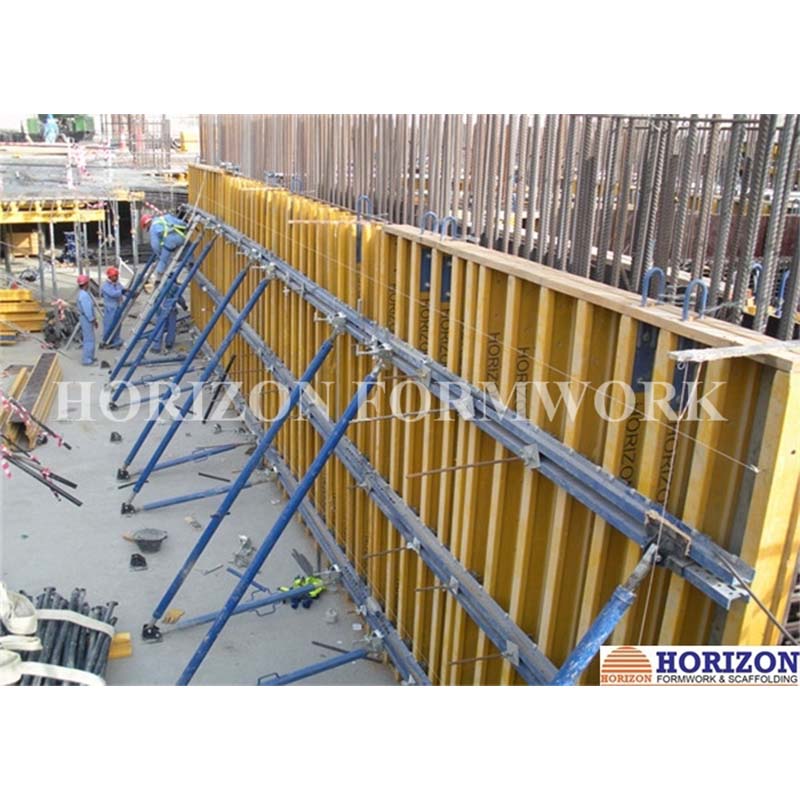
On a 26-story core, the crew poured at ≈1.6 m/h, monitored temp at 22–28°C. With Wall Formwork set at H20 centers of 50 cm and 18 mm faces, deflection stayed within tolerance; pressure charts said we were safe at ≈70 kN/m². Reusing panels in three geometries shaved four days off the cycle. The site manager in Jakarta told me, “Panels swapped fast; ties lined up—no drama.” That’s the goal.
Why it works
- Fewer SKUs to manage, but lots of layout freedom.- Solid documentation against ACI/EN—engineers sign off faster.
- Service life that pencils out: beams last, faces swap cheaply.
Actually, the small things help too—edge sealing and labeled beams reduce waste more than you’d think.
Citations
- ACI Committee 347. Guide to Formwork for Concrete (ACI 347R).
- EN 12812: Falsework – Performance requirements and general design.
- EN 636 and EN 314-2: Plywood specifications and bond quality.
- DIN 18202: Tolerances in building construction.
- ISO 9001:2015 Quality management systems.
-
OEM Pipe Shuttering: Efficient, Durable Solutions for Global Construction
NewsDec.03,2025
-
OEM A-Frame Scaffolding: Durable & Safe Solutions for Global Construction Needs
NewsDec.03,2025
-
OEM Formwork and Scaffolding: Essential Solutions for Global Construction Efficiency
NewsDec.03,2025
-
OEM Quick Industrial Scaffolding: Fast, Safe, and Sustainable Solutions for Modern Industry
NewsDec.02,2025
-
What is OEM Permanent Formwork for Suspended Slabs? Benefits & Global Insights
NewsDec.02,2025
-
OEM Plastic Formworks for Concrete: Durable, Eco-friendly Solutions for Modern Construction
NewsDec.02,2025