Fév . 25, 2026 14:38 Back to list
Steel vs. Aluminum Shoring Props: Which One Should You Choose?
In the foundational stages of any construction project, the temporary support system acts as the backbone of the entire site. Choosing the right material for your vertical supports is a decision that impacts not only the safety of the crew but also the logistical efficiency and long-term profitability of the venture. The debate between steel prop shoring posts and their aluminum counterparts is a cornerstone of modern site management. Both materials offer distinct advantages depending on the height of the pour, the weight of the load, and the specific requirements of the architectural design. Understanding these differences is essential for anyone involved in the critical tasks of propping and shoring.
The primary role of any shoring prop is to provide a reliable path for vertical loads to reach a stable ground or floor. While both steel and aluminum fulfill this role, they do so through different mechanical properties. Steel is the traditional heavyweight, known for its extreme ruggedness and cost-effective nature. Aluminum, on the other hand, is the modern challenger, offering a superior strength-to-weight ratio that can significantly reduce labor hours. As we delve into the specifics of these materials, it becomes clear that the "best" choice is rarely universal, but rather depends on the specific stresses of the job at hand.
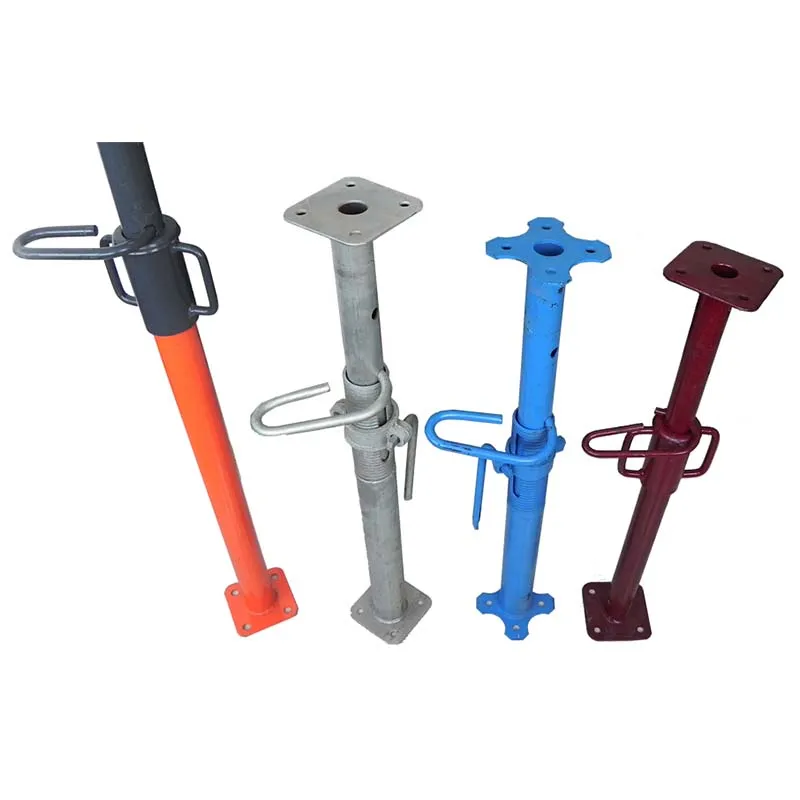
The Durability and Resilience of Steel Prop Shoring Posts
For decades, steel has been the undisputed king of the construction site. The primary reason for this dominance is the sheer resilience of steel prop shoring posts. In the chaotic environment of a busy site, equipment is frequently subjected to rough handling, accidental impacts from heavy machinery, and exposure to harsh chemicals. Steel is uniquely suited to survive this treatment. A steel post can sustain minor dents or scratches without losing its structural integrity, making it a "forgiving" material for high-traffic zones.
Furthermore, the manufacturing process for steel supports allows for a variety of protective finishes. Most high-quality shoring props made of steel are either powder-coated or hot-dipped galvanized. Galvanization, in particular, creates a metallurgical bond that prevents rust from the inside out, which is vital for equipment that may sit in damp conditions or be covered in wet concrete. This longevity makes steel an excellent investment for rental companies and large-scale contractors who need their fleet to last through years of continuous use. When you see shoring props for sale at a competitive price point, they are almost always steel, offering a low barrier to entry for new firms.
Weight Efficiency and the Telescopic Shoring Prop Advantage
While steel offers ruggedness, aluminum wins the battle of ergonomics. In the world of shoring and propping, labor is often the most significant expense. Aluminum props are roughly half the weight of steel props with similar load capacities. This weight reduction has a massive impact on the physical health of the workers and the speed of the assembly. A single worker can easily carry and position an aluminum telescopic shoring prop, whereas a steel equivalent might require two people or more frequent breaks to manage safely.
The lightweight nature of aluminum is particularly advantageous when working on high-rise projects where equipment must be moved manually between floors. Because the inner and outer tubes are easier to slide, the extension of a telescopic shoring prop is faster and smoother. This efficiency compounds over the thousands of props required for a large concrete pour. By reducing the physical strain on the crew, aluminum supports can lead to a more consistent pace of work and fewer site injuries related to heavy lifting. While the initial purchase price of aluminum is higher, many contractors find that the savings in man-hours and the reduction in transport costs eventually offset the upfront investment.
Precision Leveling with the Adjustable Shoring Prop
Regardless of the material chosen, the ability to fine-tune the height is non-negotiable. This is where the adjustable shoring prop mechanism proves its worth. In both steel and aluminum models, the threaded sleeve allows for millimetric precision. When setting up a shoring prop for slab formwork, the surface must be perfectly level to ensure the finished concrete floor meets engineering tolerances. The screw-thread design allows a worker to apply upward pressure after the prop is standing, ensuring that the formwork is tight against the joists.
The precision of an adjustable shoring prop is also vital during the "stripping" phase. Once the concrete has reached the necessary strength, the load must be released. A high-quality threaded collar allows for a controlled descent, slowly transferring the weight from the temporary prop back to the permanent structure. Aluminum props often feature "self-cleaning" threads that prevent concrete paste from jamming the mechanism, a common frustration on site. Steel props, conversely, rely on their sheer torque capacity to overcome debris. In both cases, the adjustment mechanism is what transforms a simple metal tube into a sophisticated engineering tool.
Heavy Loads and the Shoring Prop Jack System
When dealing with massive structural loads—such as supporting a bridge deck or a deep transfer beam—the choice often leans toward specialized steel configurations. The shoring prop jack system is frequently used in these high-stress scenarios. Steel's higher modulus of elasticity means it can handle immense compressive forces with very little deflection. In heavy civil engineering, where the weight per square meter is extreme, the density and strength of steel provide a safety margin that is difficult to match with aluminum without using significantly bulkier profiles.
The shoring prop jack refers to the integrated screw at the top or bottom of the post that allows for high-capacity lifting. This is a critical component when a building’s weight needs to be shifted during a renovation or a foundation repair. Steel's ability to be welded and reinforced easily also allows for the creation of "towers" by bracing multiple props together. While aluminum towers exist and are excellent for their height-to-weight ratio, steel remains the go-to material for the most demanding "heavy shoring" tasks where the sheer mass of the support is a secondary concern to its ultimate load-bearing capacity.
-
The Ultimate Guide to Shoring Props: Types, Sizes, and Applications
NouvellesFeb.25,2026
-
The Role of Shoring Props in Historical Building Restoration and Renovation
NouvellesFeb.25,2026
-
The Importance of Regular Maintenance and Inspection for Shoring Systems
NouvellesFeb.25,2026
-
Temporary Support Solutions: Using Shoring Props for Emergency Structural Repair
NouvellesFeb.25,2026
-
Steel vs. Aluminum Shoring Props: Which One Should You Choose?
NouvellesFeb.25,2026
-
Shoring Props in Trenching: Ensuring Worker Safety in Excavation Projects
NouvellesFeb.25,2026