Sep . 15, 2025 08:20 Back to list
Reusable Table Formwork for Fast Slab Concrete Construction
The Imperative Role of Table Formwork in Modern Construction
In contemporary concrete construction, particularly for multi-story buildings, the efficiency and safety of horizontal slab pouring are paramount. The advent of advanced table formwork systems has revolutionized how concrete slabs are cast, offering significant improvements over traditional methods. These systems, often referred to as table form or slab table formwork, are pre-assembled units designed for rapid deployment and stripping, making them indispensable for projects demanding speed, cost-efficiency, and high-quality finishes. This article delves into the technical aspects, operational advantages, and strategic considerations for deploying modern table formwork for slab construction.
The demand for robust and reusable formwork solutions has surged globally, driven by urbanization and the increasing complexity of architectural designs. Table formwork for slab concrete systems address these challenges by providing a modular, standardized approach to concrete pouring, minimizing manual labor, and enhancing site safety. Their design facilitates large-area pours with fewer components, streamlining the construction process for engineers and project managers.
Industry Trends in Horizontal Formwork for Slabs
The construction industry is continually evolving, with a strong focus on automation, sustainability, and enhanced safety protocols. For horizontal formwork for slab applications, several key trends are shaping product development and adoption:
- Digital Integration: The integration of Building Information Modeling (BIM) allows for precise planning, clash detection, and optimized material usage for slab formwork. This translates to reduced waste and improved project timelines.
- Lightweight Materials: While steel remains dominant, there's a growing trend towards hybrid aluminum-steel systems or even fully aluminum frames for lighter handling and faster erection, particularly for assembled table formwork.
- Increased Reusability and Durability: Manufacturers are focusing on extending the service life of reusable slab shuttering components, with innovative coatings and material treatments that resist corrosion and wear, thereby reducing environmental impact and long-term costs.
- Enhanced Safety Features: Safety mechanisms, such as integrated guardrails and fall protection points, are becoming standard, reflecting a commitment to worker well-being on sites utilizing slab shuttering.
- Customization and OEM Solutions: As projects become more unique, the demand for OEM formwork for beams and slabs and OEM flat slab formwork is rising. This allows for highly specialized formwork systems tailored to specific structural requirements.
These trends collectively point towards more intelligent, resilient, and adaptable formwork solutions, ensuring that construction practices remain at the forefront of technological innovation.
Manufacturing Process and Technical Specifications of Table Formwork
The production of high-quality table formwork involves a meticulously controlled process, ensuring components meet stringent structural and durability standards.
Process Flow:
- Material Selection: High-strength structural steel (e.g., Q235, Q345) for frames and adjustable props, chosen for its excellent tensile strength and weldability. For decking, marine-grade birch or spruce plywood (typically 18-21mm thick) with phenolic resin coating for water resistance and smooth concrete finish, or integrated steel/aluminum panels.
- Precision Cutting and Forming: Steel profiles are cut to exact dimensions using CNC laser or plasma cutting machines, minimizing material waste and ensuring geometric accuracy. Components like ledgers and beams are then precisely formed through bending and stamping.
- Welding: Expert welders employ MIG/MAG processes to join frame components, ensuring robust and durable connections. Robotic welding may be utilized for high-volume, repetitive tasks, guaranteeing consistent weld quality and minimizing human error.
- Surface Treatment: After fabrication, components undergo shot blasting to clean surfaces, followed by painting (e.g., epoxy-based coatings), hot-dip galvanization, or powder coating. This prevents corrosion, extends service life, and provides a distinctive appearance. Hot-dip galvanization is particularly crucial for components exposed to harsh environments, ensuring long-term resistance to elements.
- Assembly and Quality Control: Individual frames are assembled and critical dimensions checked. Adjustable props are tested for smooth operation and load-bearing capacity. Deck panels are securely attached to frames. Testing standards rigorously adhered to include ISO 9001 for quality management, EN 12812 for formwork performance, and ANSI/ASSE A10.9 for safety.
- Final Inspection and Packaging: Each unit of slab table formwork undergoes a final inspection for structural integrity, finish quality, and adherence to specifications before being securely packaged for transport.
This meticulous process ensures that the finished table formwork delivers superior performance, energy saving through rapid construction cycles, and exceptional corrosion resistance due to advanced coatings, making it suitable for demanding target industries such as petrochemical, metallurgy, water supply & drainage, and high-rise commercial construction. The typical service life for well-maintained steel frames can exceed 15 years, with plywood decks replaced after 50-200 uses depending on care.
Key Technical Specifications: Table Formwork
| Parameter | Specification Details |
|---|---|
| Panel Material (Frame) | High-strength Q235/Q345 Steel, Hot-dip Galvanized or Powder Coated |
| Decking Material | 18-21mm Marine-grade Birch/Spruce Plywood with Phenolic Film, or Steel Sheet |
| Standard Panel Sizes (LxW) | 2.7m x 4.0m, 2.7m x 5.0m, 2.0m x 4.0m, (Custom sizes available for OEM formwork for concrete slabs) |
| Weight per Panel (avg.) | Approx. 250-400 kg (depending on size and material) |
| Slab Thickness Range | 150 mm to 600 mm (with appropriate shore spacing) |
| Design Load Capacity | Up to 60 kN/m² (Live load + Dead load) |
| Number of Reuse Cycles | Frame: 300+ cycles; Plywood Deck: 50-200 cycles |
| Safety Compliance | ISO 9001, EN 12812, ANSI/ASSE A10.9 (Relevant regional standards) |
| Stripping Time | As fast as 3-5 days (dependent on concrete strength and curing conditions) |
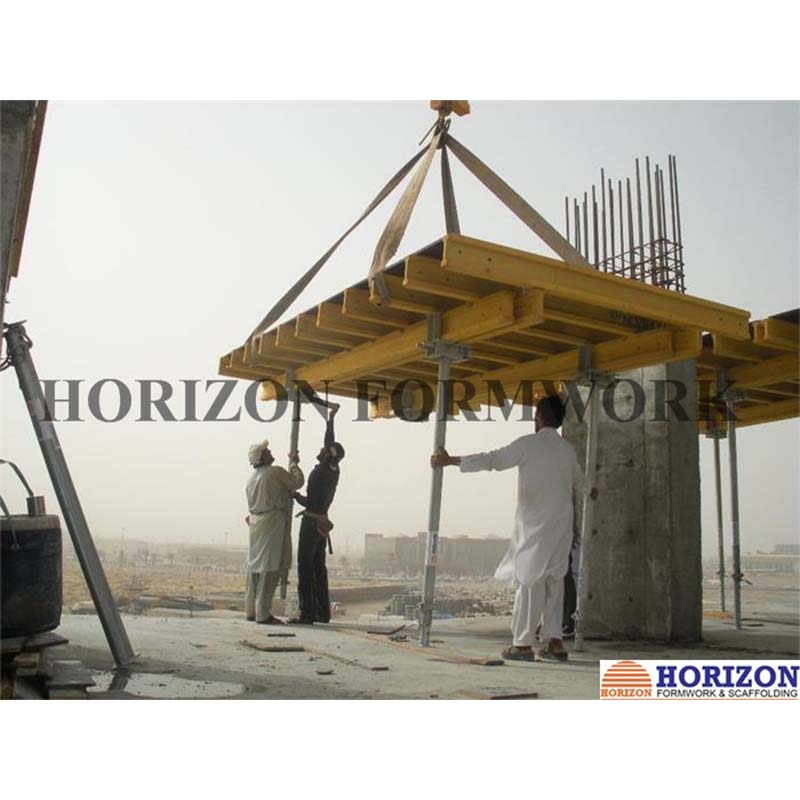
High-strength table formwork for efficient slab construction.
Technical Advantages and Application Scenarios
The inherent design of table formwork systems offers several compelling advantages that contribute to overall project success:
- Speed and Efficiency: Large pre-assembled units mean faster erection and stripping compared to conventional slab formwork systems. A crane can lift and reposition entire tables, significantly reducing labor time and accelerating floor cycles. This makes flexible slab shuttering an ideal choice for fast-track projects.
- Cost Reduction: Reduced labor hours, fewer individual components to manage, and high reusability contribute to significant cost savings over the project lifecycle. Optimized logistical flows further enhance cost-effectiveness.
- Enhanced Safety: The system minimizes work at height, as much of the assembly and stripping can be done from the floor below. Integrated safety features and robust construction reduce the risk of accidents.
- Superior Concrete Finish: The rigid structure and high-quality plywood or steel decking provide a smooth, consistent concrete surface, reducing the need for extensive post-pour finishing.
- Versatility: Adaptable to various slab thicknesses and building geometries. Modular components allow for infill areas and adjustments around columns or irregularities.
- Environmental Benefits: High reusability of frames and ability to refurbish plywood decks reduce construction waste, aligning with sustainable building practices.
Typical Application Scenarios:
Table formwork systems are optimally suited for a broad range of large-scale concrete construction projects:
- High-rise Commercial Buildings: Ideal for office towers and mixed-use developments where repetitive slab casting is required across many floors. The system's speed directly impacts project completion timelines.
- Residential Apartment Complexes: Multi-story residential projects benefit from the efficiency and labor savings, allowing developers to meet tight housing demand schedules.
- Parking Structures: Large, open slab areas in multi-level parking garages are perfectly suited for the expansive coverage and rapid movement capabilities of table formwork.
- Industrial Facilities: Factories and warehouses with large floor plates and consistent slab requirements can significantly reduce construction duration and costs using this system.
- Infrastructure Projects: Specific segments of infrastructure requiring vast elevated concrete slabs, such as bridge decks or elevated pedestrian walkways, can also leverage these systems.
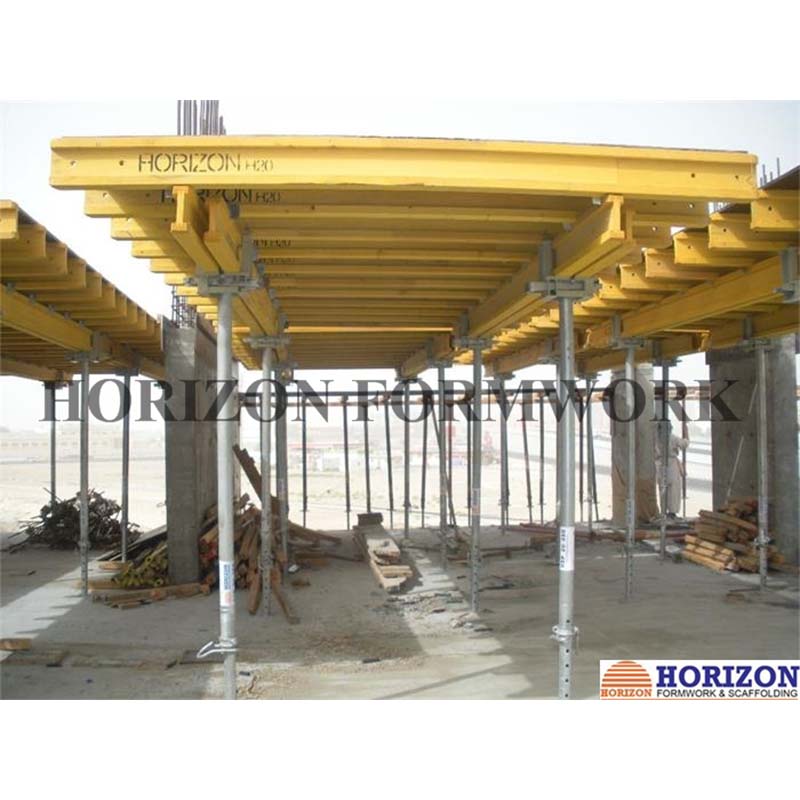
Efficient setup of table formwork for slab construction on a busy site.
Vendor Comparison and Customized Solutions
Selecting the right supplier for table formwork is a critical decision that impacts project efficiency, safety, and budget. While many vendors offer similar products, key differentiators emerge in material quality, engineering support, and after-sales service.
Key Factors for Vendor Comparison:
| Factor | High-Tier Vendor Offerings | Standard Vendor Offerings |
|---|---|---|
| Material Quality | Certified high-strength steel (Q345 equivalent), multi-layer protective coatings (hot-dip galvanized), premium marine-grade plywood (WBP bond) | Standard steel (Q235 equivalent), basic painted finish, standard plywood |
| Design & Engineering | In-house R&D, BIM compatibility, structural analysis, custom design for complex geometries (OEM formwork for beams and slabs) | Standard catalog designs, limited customization, basic layout support |
| Manufacturing Process | Automated CNC, robotic welding, ISO 9001 certified production, stringent QC protocols | Manual/semi-automated processes, less rigorous QC |
| Technical Support | Dedicated project engineers, on-site training, 24/7 technical hotline, design optimization services | Basic documentation, limited remote support |
| Certification & Compliance | Compliance with EN 12812, AS/NZS 3610, ACI 347, full load testing data, third-party verified reports | Self-declaration of compliance, limited test data |
| Sustainability & Reusability | Optimized design for maximum reuse cycles (>300), refurbishment programs, eco-friendly finishes | Standard reusability, less focus on refurbishment |
Customized Solutions (OEM Formwork):
Recognizing that no two construction projects are identical, leading manufacturers offer bespoke OEM formwork for concrete slabs and OEM flat slab formwork solutions. This involves:
- Tailored Design: Engineering teams work closely with clients to develop formwork panels and support structures that perfectly match specific slab dimensions, beam configurations, and column layouts.
- Material Optimization: Customization extends to material choices, allowing for lighter aluminum components where crane capacity is limited, or heavier-duty steel for extreme load requirements.
- Integration with Other Systems: Designing table formwork that seamlessly integrates with climbing formwork systems for core walls or specialized beam formwork can create a unified, efficient pouring solution.
- Project-Specific Logistics: Customized formwork solutions often include detailed logistical plans for delivery, storage, erection, and stripping sequences, optimizing the entire construction flow.
These specialized services ensure that clients receive the most efficient, safe, and cost-effective formwork system for their unique project demands, enhancing overall project deliverability and quality.
Application Case Studies: Delivering Excellence with Table Formwork
The practical benefits of table formwork are best illustrated through real-world applications, showcasing improved efficiency and cost savings.
Case Study 1: High-Rise Residential Tower, Metropolis City
Project Overview: Construction of a 50-story residential tower with a typical floor plate of 1,200 m², requiring a 250mm concrete slab for each floor. The client sought a solution to achieve a 5-day floor cycle.
Solution Implemented: A comprehensive table formwork system was designed, featuring standard 2.7m x 4.0m panels. Specialized infill beams and drop-head shores were utilized for rapid stripping without disturbing the main support structure.
Results: The project consistently achieved a 4.5-day floor cycle, exceeding the client's target. Labor hours for formwork erection and stripping were reduced by 35% compared to conventional methods. The system's robustness facilitated over 100 reuses per panel, contributing to significant material cost savings. Customer feedback highlighted the system's ease of use and the superior finish of the concrete slabs.
Case Study 2: Industrial Complex, Tech Valley
Project Overview: Development of a large industrial complex comprising three identical multi-story buildings, each with expansive floor areas (approx. 2,500 m² per floor) and heavy load requirements for machinery.
Solution Implemented: Heavy-duty table formwork for slab concrete with enhanced load capacity (60 kN/m²) was engineered. Customized panels were supplied to accommodate unique column grid patterns and allow for embedded elements. The system included specialized rolling carriages for horizontal movement, minimizing crane dependency.
Results: The use of tailored assembled table formwork reduced the overall concrete pouring schedule by 20%. The robust design ensured worker safety despite the heavy loads, and the consistent slab quality minimized remedial work. The client praised the system's adaptability to their specific industrial layout and the reliability of the support provided throughout the project.
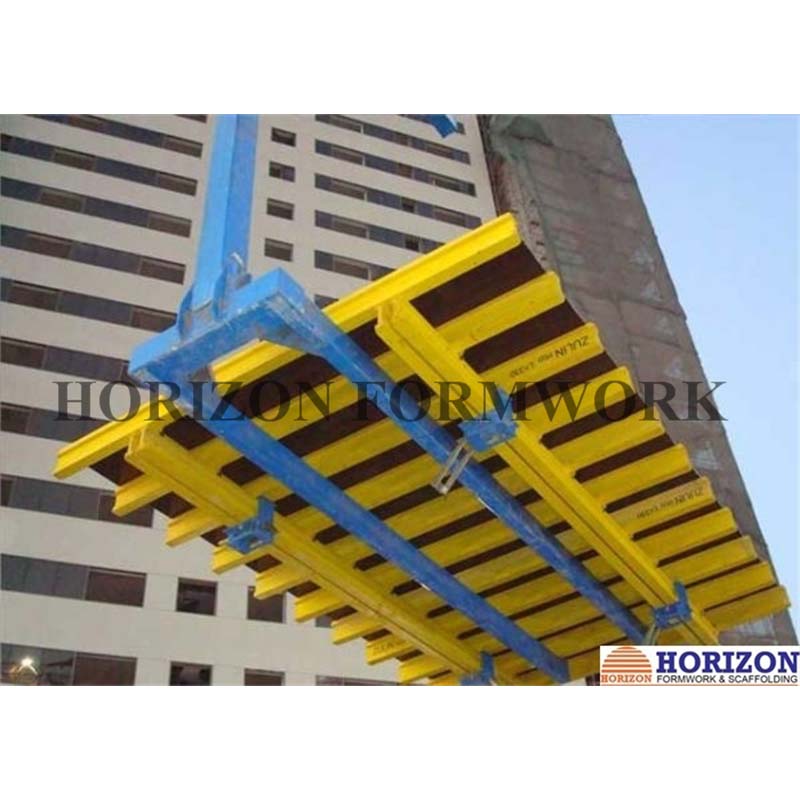
Efficient use of slab table formwork in a large-scale construction project.
Frequently Asked Questions (FAQ)
Q: What is the typical lead time for ordering custom table formwork?
A: Lead times for custom table formwork can vary based on design complexity and order volume. Generally, after design approval, production and delivery typically range from 4 to 8 weeks. We recommend consulting with our sales team for a precise timeline based on your project specifics.
Q: What warranty is provided with your table formwork systems?
A: Our steel table formwork frames typically come with a 5-year warranty against manufacturing defects. Plywood decking, being a consumable, has a service life that depends on usage and maintenance, but we guarantee the quality of initial material and adhesion. Detailed warranty information is provided with each purchase agreement.
Q: How does your customer support work for project planning and on-site assistance?
A: We offer comprehensive customer support from initial project consultation through to project completion. This includes dedicated engineering support for formwork layout and design, technical assistance via phone/email, and on-site supervision or training upon request. Our goal is to ensure optimal performance of our slab formwork on your site.
Q: Is your table formwork compatible with varying slab thicknesses?
A: Yes, our table formwork systems are designed for versatility. By adjusting the spacing of supporting props and utilizing different infill components, our systems can accommodate a wide range of slab thicknesses, typically from 150mm up to 600mm. For exceptionally thick slabs, custom design considerations may apply.
Lead Time, Fulfillment, and After-Sales Support
We understand the time-sensitive nature of construction projects. Our commitment to efficient logistics and robust support ensures seamless project execution.
Fulfillment Process:
- Consultation & Design: Initial project assessment, detailed formwork design, and proposal generation.
- Order Confirmation: Upon acceptance, order processing and production scheduling for your table formwork.
- Manufacturing & QC: Production according to ISO 9001 standards, followed by rigorous quality control checks.
- Packaging & Logistics: Secure packaging and coordination with reliable shipping partners for timely delivery to your site.
- On-Site Support: Optional on-site supervision and technical training for your crew during initial setup.
After-Sales Support:
Our relationship with clients extends beyond delivery. We provide comprehensive after-sales support to maximize the value and longevity of your table formwork investment:
- Technical Assistance: A dedicated support team is available to address any operational questions or challenges during your project.
- Maintenance Guidance: Detailed manuals and advice on proper cleaning, storage, and maintenance practices to extend the life of your reusable slab shuttering.
- Spare Parts Availability: Ready availability of spare parts for all components, ensuring minimal downtime.
- Refurbishment Services: For certain components like plywood decks or damaged frames, we can offer refurbishment services to further extend usability.
References
- ACI Committee 347. (2014). Guide to Formwork for Concrete. American Concrete Institute.
- EN 12812:2004. (2004). Support work – Performance requirements and general design. European Committee for Standardization.
- Hurd, M. K. (2005). Formwork for Concrete (7th ed.). American Concrete Institute.
- ISO 9001:2015. (2015). Quality management systems – Requirements. International Organization for Standardization.
- Construction Industry Institute (CII). (2018). Best Practices in Formwork Management.
-
OEM Pipe Shuttering: Efficient, Durable Solutions for Global Construction
NewsDec.03,2025
-
OEM A-Frame Scaffolding: Durable & Safe Solutions for Global Construction Needs
NewsDec.03,2025
-
OEM Formwork and Scaffolding: Essential Solutions for Global Construction Efficiency
NewsDec.03,2025
-
OEM Quick Industrial Scaffolding: Fast, Safe, and Sustainable Solutions for Modern Industry
NewsDec.02,2025
-
What is OEM Permanent Formwork for Suspended Slabs? Benefits & Global Insights
NewsDec.02,2025
-
OEM Plastic Formworks for Concrete: Durable, Eco-friendly Solutions for Modern Construction
NewsDec.02,2025