Oct . 12, 2025 11:05 Back to list
Steel Prop with Tripod & Fork Head | Heavy-Duty, Adjustable
Tripod & Fork Head: the quiet workhorse behind stable slab formwork
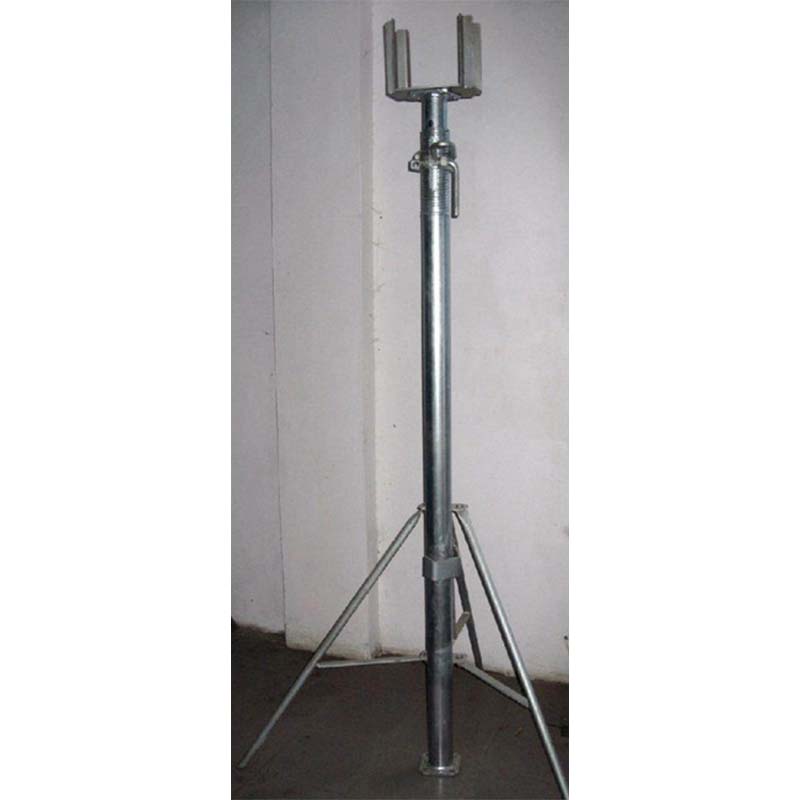
If you’ve ever watched a slab pour humming along without the usual drama, there’s a good chance a solid prop with tripod and fork head combo was doing the heavy lifting—quietly. I’ve seen crews shave hours off an erection schedule just by upgrading this little duo. Sounds mundane, but it isn’t.
What’s trending in site practice
Contractors want faster cycles, safer set-ups, and gear that survives rental churn. In fact, folding tripods that pin in seconds and fork heads that accept single or double H20 beams are now standard asks. Corrosion control (hot-dip galvanizing or durable powder coat) and verifiable testing to EN/ISO norms are also moving from “nice to have” to “expected.”
How this unit works (plain English)
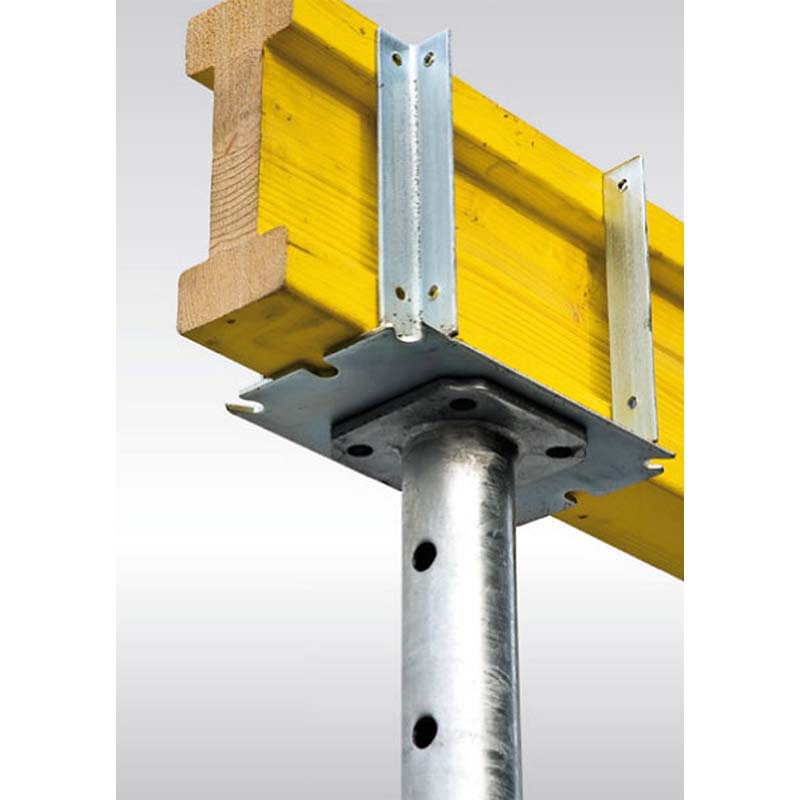
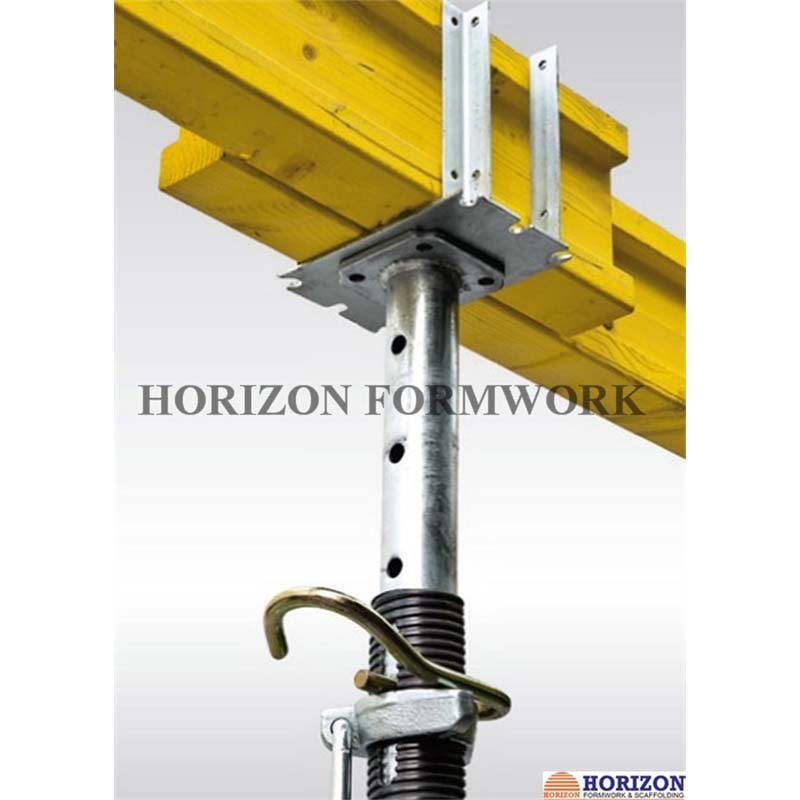
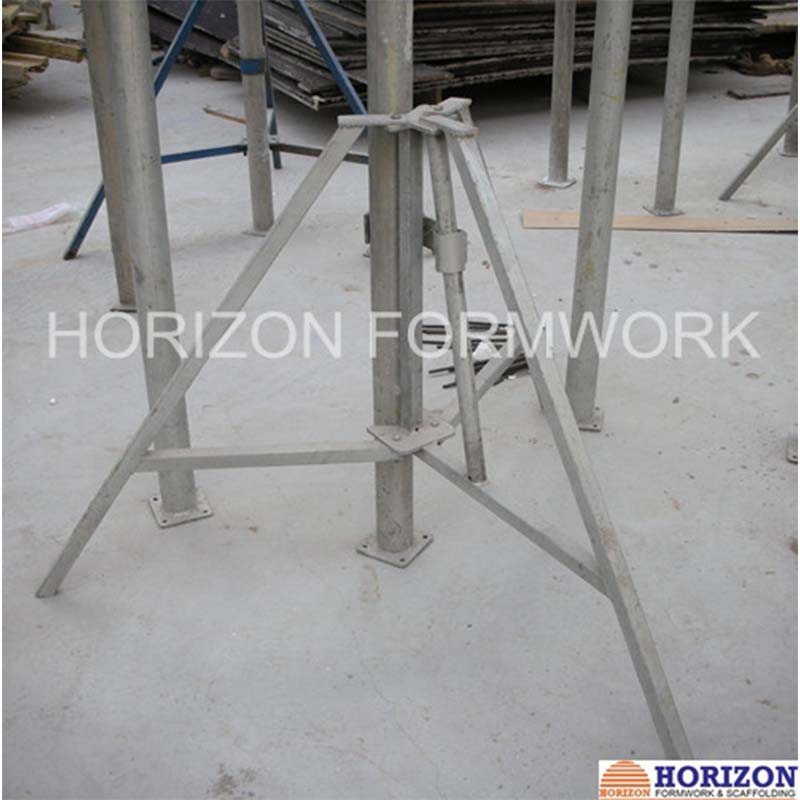
The folding tripod stabilizes a steel prop during erection—especially for high, free-standing table forms. The fork head sits on top, taking one H20 beam longitudinally or two laterally. That flexibility is a life-saver in tight cores. Origin-wise, this model ships from Hustpark Building No. 4, Zhongxing East Street, Xingtai, Hebei, China—where, frankly, a lot of the world’s good formwork hardware is made nowadays.
Core specifications (field-realistic)
| Tripod material | Q235/S235 steel, press-formed legs, MIG-welded joints |
| Finish options | Hot-dip galvanized (ISO 1461) or powder coat ≈80 μm |
| Fork head | Pressed steel, accepts single longitudinal H20 or double lateral H20 |
| Typical prop compatibility | EN 1065-class steel props, OD ≈48–60 mm (real-world may vary) |
| Static load (tripod as stabilizer) | Designed to stabilize props rated ≈20–30 kN; proof tested ≥1.5× |
| Folded size & weight | Around 1.2 m folded length; ≈9–12 kg per unit |
Process, testing, and service life
- Materials: Q235/S235 steel; fork head with reinforced saddles for H20 flanges (per EN 13377 guidance).
- Methods: CNC press, jigs for angle precision, MIG welding, galvanizing or powder coat; QC with go/no-go gauges.
- Testing: static proof load (≥1.5×), functional locking-pin endurance (≥5,000 cycles), salt-spray ASTM B117 ≥240 h for coated parts; adhesion ASTM D3359.
- Standards reference: EN 1065 (props interface), EN 13377 (timber beam geometry), ISO 1461 (galvanizing).
- Service life: ≈5–8 years in rental fleets; longer with gentle handling and dry storage.
Where it shines
High-rise slabs, parking decks, transfer slabs, and industrial floors. During early pours or windy days, a prop with tripod is the difference between calm and chaos. Many supervisors say the fork head’s “double H20 lateral” option cuts jigging time by a lot—no small thing on a 3,000 m² deck.
Vendor snapshot (what buyers compare)
| Vendor | Certs | Load/Testing | Lead Time | Customization |
|---|---|---|---|---|
| Horizon (Xingtai) | ISO 9001; test reports on request | Proof ≥1.5×; salt-spray ≥240 h | ≈3–5 weeks | Color/logo, fork width, pins |
| GlobalBrand A | ISO 9001/14001 | Type-tested; CPR docs | ≈6–8 weeks | Wide catalogue |
| Local Fabricator B | Varies | Shop test only | ≈1–3 weeks | Made-to-order |
Customization
Options include fork head width for different H20 brands, pin styles (chain-retained, spring), coatings (HDG vs. powder), and color-code paint. Contractors also request stamped IDs for asset tracking—smart move for rental fleets using every prop with tripod across sites.
Case note (real-world)
Mid-rise project, 3.4 m floor-to-floor, tight schedule. Site swapped in this tripod and fork head for edge bays. Result: about 18% reduction in set-up time (site logs), plus cleaner load transfer to props. Foreman’s comment—“less wrestling, more pouring.” Hard to argue.
Quick spec checklist
- Match fork head to H20 beam width and flange profile (see EN 13377 guidance).
- Ensure prop OD fits tripod collar snugly; verify EN 1065 class where relevant.
- Ask for coating certificates (ISO 1461 or powder specs) and proof-load reports.
- Train crews per OSHA/ACI formwork practice; always secure locking pins.
Authoritative references
- EN 1065: Adjustable Telescopic Steel Props (CEN). Overview: https://standards.cen.eu
- ISO 1461: Hot dip galvanized coatings. https://www.iso.org/standard/69908.html
- EN 13377: Timber formwork beams. https://www.beuth.de/en/standard/din-en-13377/
- OSHA 1926 Subpart Q – Concrete and Masonry Construction. https://www.osha.gov/laws-regs/regulations/standardnumber/1926/1926SubpartQ
- ACI 347R – Guide to Formwork for Concrete. https://www.concrete.org
-
OEM Pipe Shuttering: Efficient, Durable Solutions for Global Construction
NewsDec.03,2025
-
OEM A-Frame Scaffolding: Durable & Safe Solutions for Global Construction Needs
NewsDec.03,2025
-
OEM Formwork and Scaffolding: Essential Solutions for Global Construction Efficiency
NewsDec.03,2025
-
OEM Quick Industrial Scaffolding: Fast, Safe, and Sustainable Solutions for Modern Industry
NewsDec.02,2025
-
What is OEM Permanent Formwork for Suspended Slabs? Benefits & Global Insights
NewsDec.02,2025
-
OEM Plastic Formworks for Concrete: Durable, Eco-friendly Solutions for Modern Construction
NewsDec.02,2025