Oct . 18, 2025 12:25 Back to list
Table Formwork: Fast, Reusable, OEM Slab Shuttering System
Inside the fast-cycle slab system reshaping high‑rise schedules
I’ve walked more than a few cores and lift lobbies where crews swear by table formwork. To be honest, the pitch sounds almost too neat: fly large tables, skip daily strip-and-rebuild, and push floors on a tidy cadence. But on sites that plan it right, the gains are real—less labor churn, fewer crane picks, cleaner soffits, safer edges. Actually, it’s become a quiet trend in high-rise and podium slabs as contractors chase predictable cycles and fewer hidden costs.
What’s unique about HORIZON’s system
From Hustpark Building No. 4, Zhongxing East Street, Xingtai, Hebei, China, HORIZON offers large-panel table formwork built for high-rise slabs. Tables roll or “fly” horizontally and vertically without dismantling—meaning fewer touch points per cycle. Many customers say the biggest surprise isn’t speed; it’s the consistency from floor to floor.
Product specs at a glance
| Item | Specification (≈, real-world use may vary) |
|---|---|
| Typical Table Sizes | 4.8 × 2.4 m; 6.0 × 2.4 m; custom panels on request |
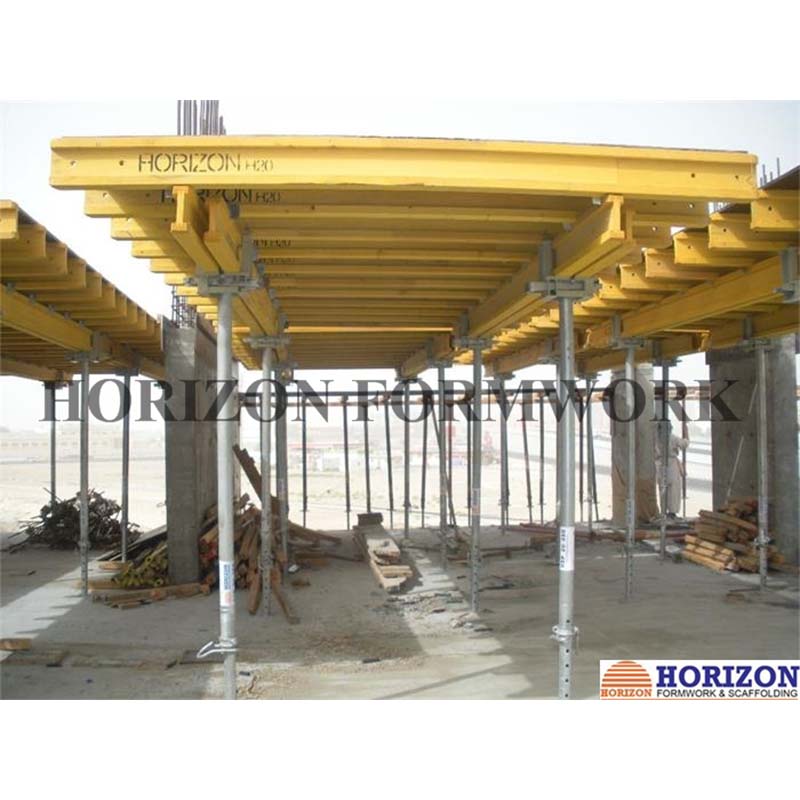
| Main Beams | Aluminum beams (120–150 mm) or H20 timber beam options |
| Decking | 18–21 mm phenolic film-faced plywood, 220 g/m² |
| Load Rating | ≈ 5.0 kN/m² service load, deflection control to L/400 target |
| Adjustment | Screw jacks (≈ 500 mm) + telescopic props; EN 1065-class props available |
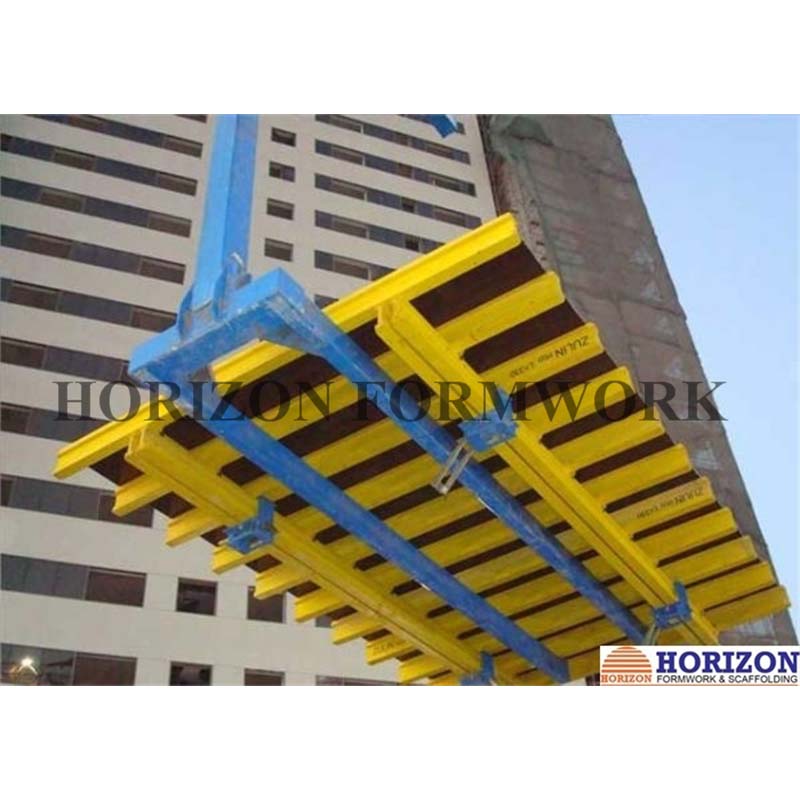
| Handling | Crane lifting by fork; table trolleys for horizontal moves |
| Reuse & Service Life | Plywood 40–80 pours; frames 8–10 years with routine maintenance |
| Compliance | Designed referencing EN 12812, ACI 347; ISO 9001 manufacturing |
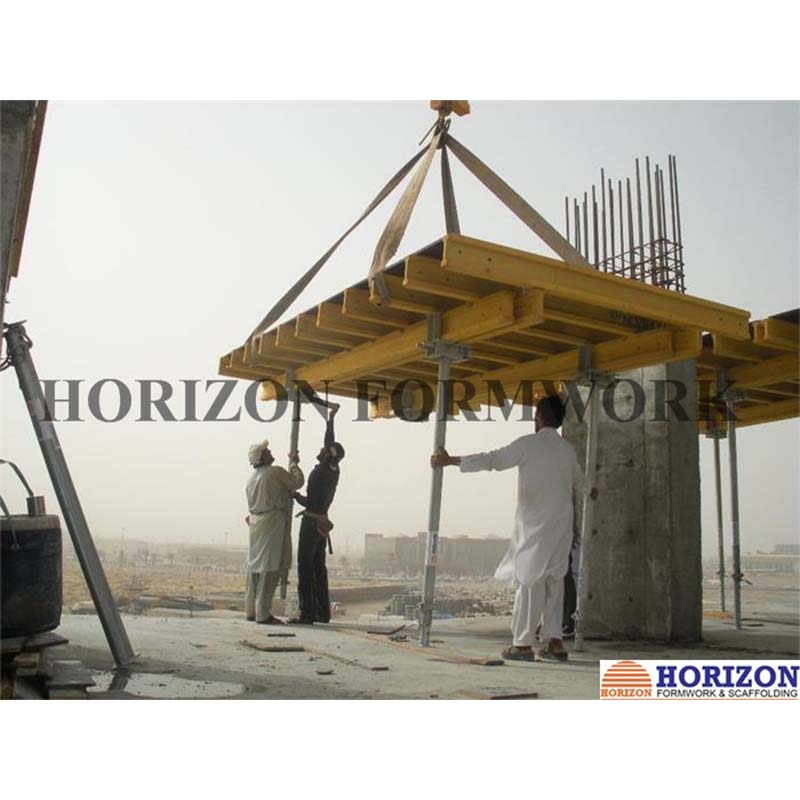
How it runs on site (materials + method)
- Pre-assembly: aluminum or H20 beams, joists, and plywood decked, edge rails fitted.
- Shoring: telescopic props set to grid, screw jacks fine-tuned to soffit elevation.
- QA checks: prop spacing vs. slab loads; deflection check; plywood integrity.
- Pour: follow rate limits per ACI 347 guidance; monitor camber and support.
- Strike: after concrete reaches required strength; retain re-shores as per calc.
- Move: release edge, roll to next bay or fly by crane; minimal tool work.
Industries: high-rise residential, commercial towers, hospitals, education, and large parking decks. The advantages? Faster cycles, fewer loose parts, safer edges, and cleaner MEP coordination under the slab. I guess the main caveat is logistics—plan crane time and dolly paths early or you’ll chase your tail later.
Vendor comparison (field-notes style)
| Vendor | Load Class | Customization | Cycle Support | Price Index |
|---|---|---|---|---|
| HORIZON | ≈ 5.0 kN/m² (typical) | High: sizes, rails, plywood types | Shop drawings + site startup | ≈ 0.8–0.9× |
| Global Brand A | ≈ 5–6 kN/m² | Medium: catalogue-driven | Strong regional teams | ≈ 1.0–1.2× |
| Global Brand B | ≈ 4.5–5.5 kN/m² | High on request | Project-based consultants | ≈ 0.9–1.1× |
Customization and QA
HORIZON adapts table formwork to odd geometries, hanging slabs, and drop panels; plywood can be swapped for plastic-faced boards where humidity is a pain. Testing follows EN 12812 principles; props to EN 1065 where specified. Factory QA runs load/deflection checks; a sample report I saw showed mid-span deflection within L/450 at 4.5 kN/m².
Mini case notes
Southeast Asia, 38-story residential: crew flew ≈ 2,000 m²/day using two forks; achieved a 5-day floor cycle after week two. Middle East podium: heavy MEP penetrations—pre-cut plywood on the table formwork shaved ≈ 15% rework, according to the site engineer. Your mileage may vary, but the pattern is familiar.
Safety, standards, and service
Edge rails, toe boards, and lifting forks should be used per ACI 347 and OSHA Subpart Q guidance. Plan reshoring per calc—don’t rush. HORIZON’s table formwork is produced under ISO 9001; component CE status depends on item class. Lead times are typically 4–6 weeks; spares and plywood are stocked.
Citations
-
OEM Pipe Shuttering: Efficient, Durable Solutions for Global Construction
NewsDec.03,2025
-
OEM A-Frame Scaffolding: Durable & Safe Solutions for Global Construction Needs
NewsDec.03,2025
-
OEM Formwork and Scaffolding: Essential Solutions for Global Construction Efficiency
NewsDec.03,2025
-
OEM Quick Industrial Scaffolding: Fast, Safe, and Sustainable Solutions for Modern Industry
NewsDec.02,2025
-
What is OEM Permanent Formwork for Suspended Slabs? Benefits & Global Insights
NewsDec.02,2025
-
OEM Plastic Formworks for Concrete: Durable, Eco-friendly Solutions for Modern Construction
NewsDec.02,2025