Oct . 08, 2025 22:35 Back to list
Table Formwork: Faster, Safer, Reusable OEM Slab System?
Field Notes from the Slab Edge: Why I Keep Coming Back to table formwork
Pour enough elevated slabs and you learn a simple truth: speed without safety is a fantasy. The HORIZON system — made in Hustpark Building No. 4, Zhongxing East Street, Xingtai, Hebei, China — leans into both. The tables roll and fly without dismantling, which, to be honest, is what foremen quietly crave on tight schedules.
Industry trend check: high-rises are getting taller, cycles are getting shorter, and labor is tight. It seems that integrated, reusable table formwork with predictable load paths is winning over stick-built solutions. Not everywhere, sure, but on projects where repetition pays — malls, parking decks, residential towers — it’s a no-brainer.
Typical Applications
- Large-area slab pours in high-rise cores and wings
- Podium decks and parking structures
- Hospitals and schools (clean, repeatable bays)
- Data centers with tight floor cycle times
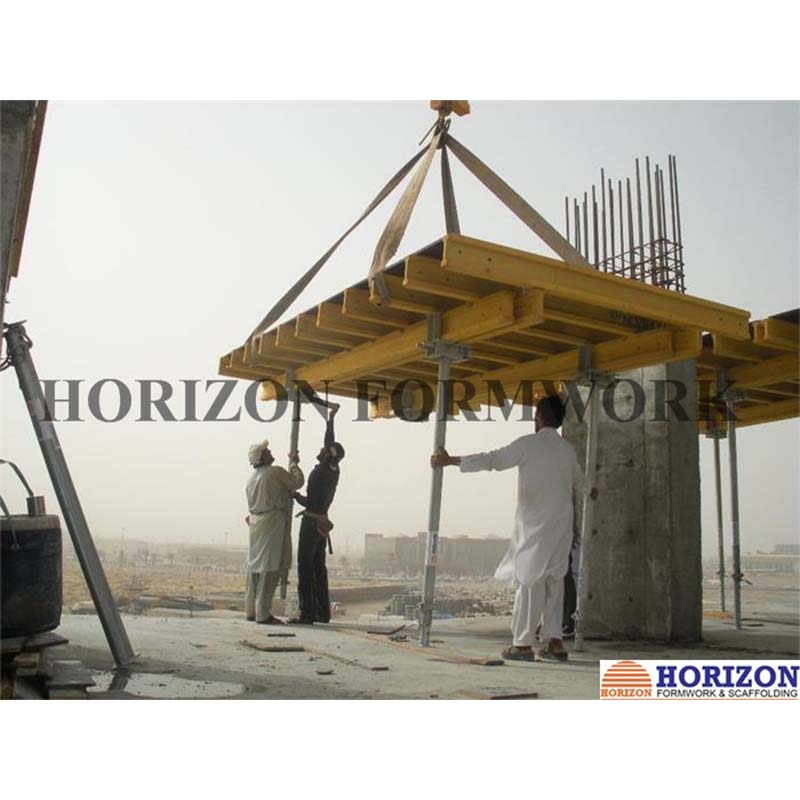
Product Specs at a Glance
| Table module size | ≈ 3.0×5.0 m (others on request) |
| Permissible load | ≈ 5.0 kN/m² (real-world use may vary; verify per design) |
| Decking | 18–21 mm film-faced plywood or LVL; optional plastic facing |
| Main beams | Aluminum or steel primary beams with secondary joists |
| Support/props | Adjustable legs with spindles; caster dollies for rolling |
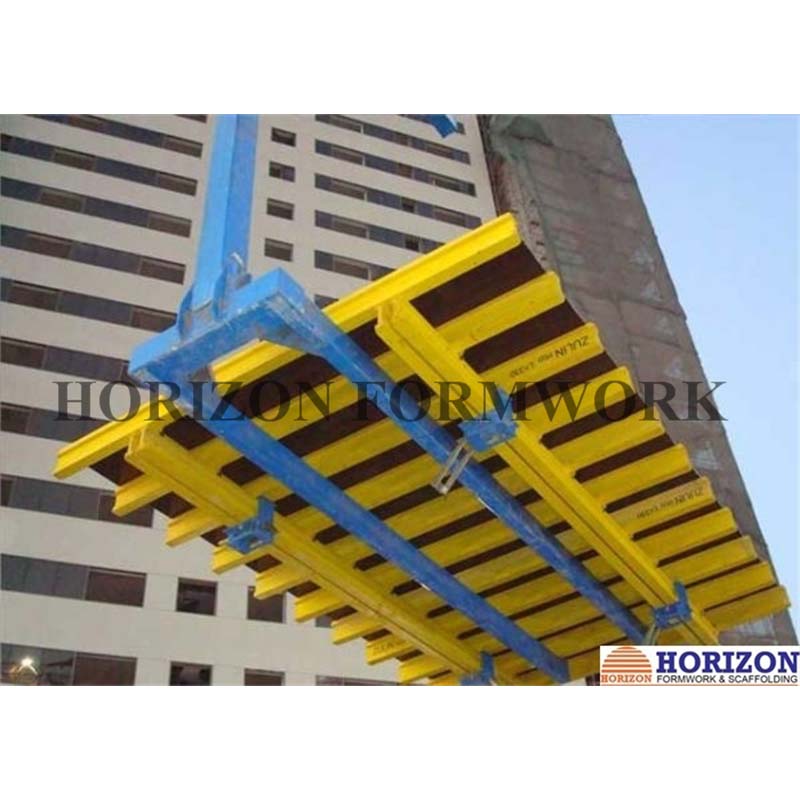
| Move method | Horizontal rolling; vertical crane “fly” with fork/frames |
| Expected service life | ≈ 200–300 cycles with proper care |
Testing-wise, Horizon submits tables to EN 12812 falsework checks and internal load-cell tests. On one recent batch, deflection measured ≈ 2 mm at 5 kN/m² — comfortably under typical criteria for temporary works. Of course, your slab thickness, rebar congestion, and pour rate change the math.
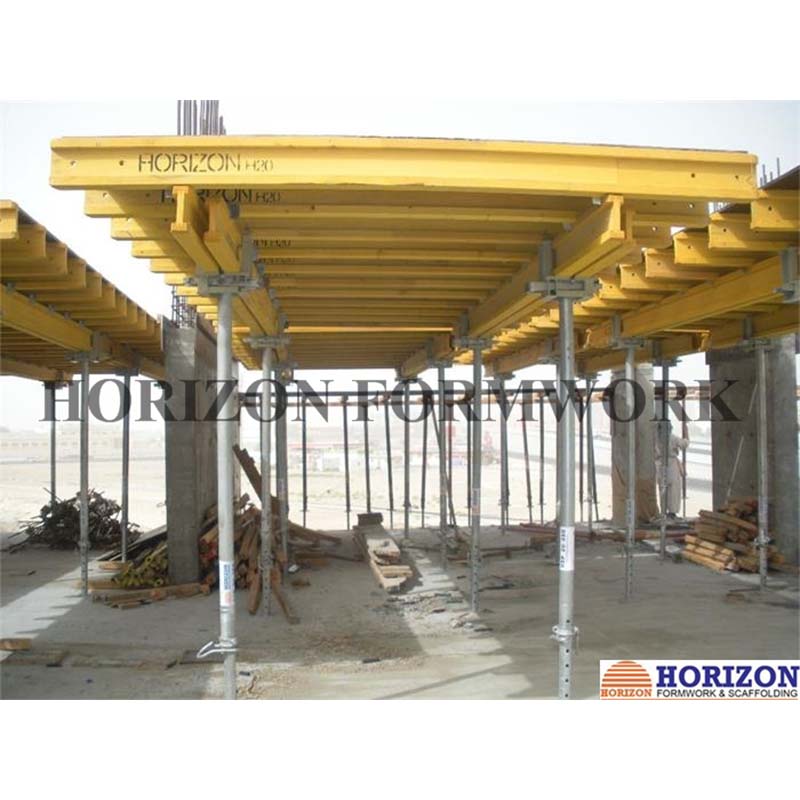
How It’s Built and Deployed
- Materials: high-strength aluminum/steel beams, film-faced plywood, galvanized connectors.
- Assembly: factory-jigged modules; site legs and edge protection added on arrival.
- Method: roll into bay, adjust spindle heights, check line/level, pour, cure, drop 20–30 mm, roll to next bay, or fly by crane.
- Testing standards: EN 12812 load cases; design to ACI 347/AS 3610 guidance per project engineer.
- Quality & certifications: ISO 9001 manufacturing; welds VT/MT spot-checked.
- Service life: protect faces with release agent, edge-seal plywood; store dry between cycles.
Advantages We See on Site
- Cycle speed: many customers say one table team can turn a bay in a morning.
- Safety: fewer loose parts in the air; guardrails can ride with the table.
- Cost: less dismantling labor; higher reuse rate vs. stick form.
- Finish: consistent soffit flatness; fewer cold-joint surprises.
Vendor Snapshot (real-world use may vary)
| Vendor | Module Range | Typical Load | Notable Features |
|---|---|---|---|
| HORIZON | ≈ 2.4–5.0 m spans | ≈ 5.0 kN/m² | Roll/fly without dismantling; customizable legs/edges |
| Vendor A | ≈ 2.0–4.5 m | ≈ 4.0–5.0 kN/m² | Lightweight alu beams; quick-release heads |
| Vendor B | Custom only | Project-specific | Integrated edge protection; site training package |
Customization Options
Edge infill beams, drop-heads for early striking, laminated faces for architectural finishes, fire-retardant plywood, and bay-specific caster frames. I’ve even seen corner “dog-ears” for tight core turns — surprisingly handy.
Case Notes
Residential tower, 38 stories: crew reported a one-day cycle on typical floors with table formwork plus pre-tied rebar mats. Another job — a hospital podium — shaved two weeks by rolling tables under a weather deck while pours continued. “The consistency saved our rework budget,” the site engineer told me. I guess that’s the quiet metric that matters.
Standards, Safety, and Proof
- Designed/checked per EN 12812 (Falsework) and ACI 347 guidance.
- Factory quality under ISO 9001; welds and materials traceable.
- Sample test data: deflection ≈ 2 mm at 5 kN/m²; no visible yielding; factor of safety as per temporary works design notes.
Authoritative citations
- EN 12812: Falsework – Performance requirements and general design.
- ACI 347R: Guide to Formwork for Concrete (American Concrete Institute).
- ISO 9001: Quality Management Systems – Requirements.
-
OEM Pipe Shuttering: Efficient, Durable Solutions for Global Construction
NewsDec.03,2025
-
OEM A-Frame Scaffolding: Durable & Safe Solutions for Global Construction Needs
NewsDec.03,2025
-
OEM Formwork and Scaffolding: Essential Solutions for Global Construction Efficiency
NewsDec.03,2025
-
OEM Quick Industrial Scaffolding: Fast, Safe, and Sustainable Solutions for Modern Industry
NewsDec.02,2025
-
What is OEM Permanent Formwork for Suspended Slabs? Benefits & Global Insights
NewsDec.02,2025
-
OEM Plastic Formworks for Concrete: Durable, Eco-friendly Solutions for Modern Construction
NewsDec.02,2025