Nov . 07, 2025 12:30 Back to list
China Single Sided Wall Formwork | Fast, Safe, Custom
Field Notes on Single-Sided Wall Formwork: What’s Working in 2025
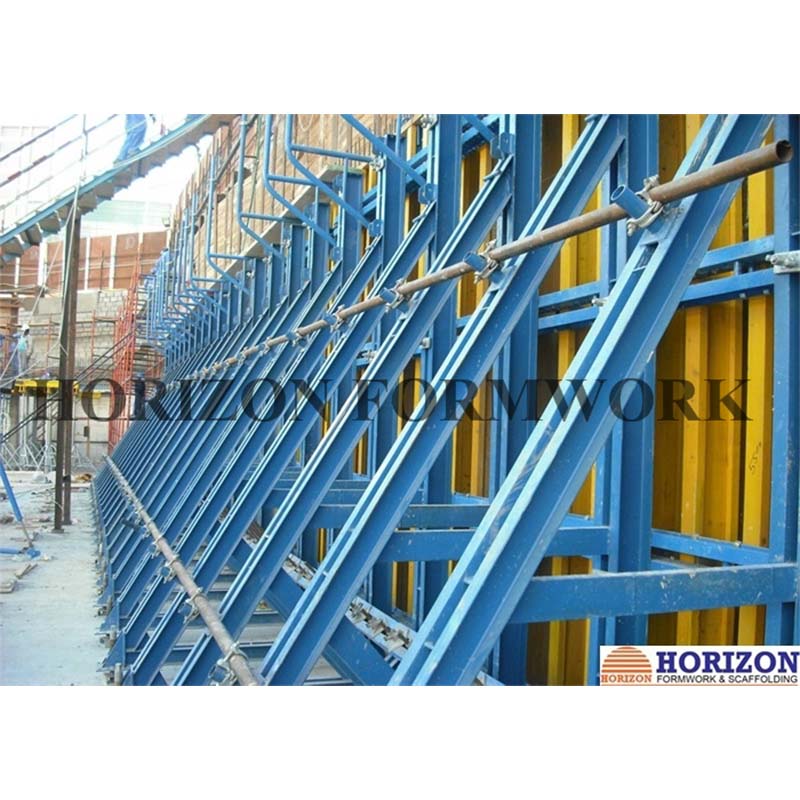
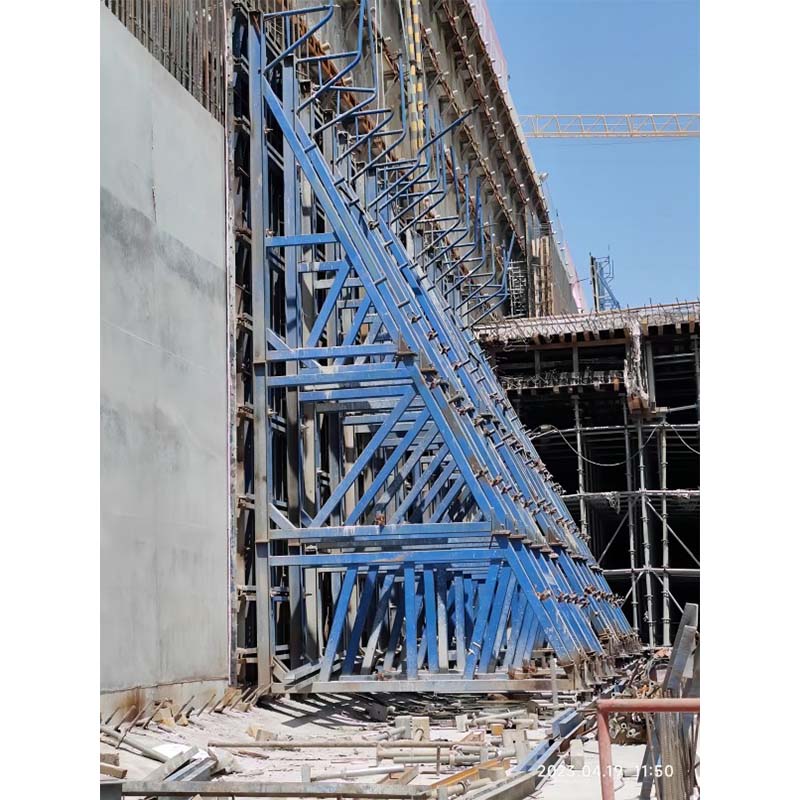
If you’re speccing a China Single Sided Wall Formwork for a basement retaining wall or a deep shaft, here’s the bottom line from the jobsite: stability and pressure management matter more than brochure gloss. HORIZON’s single-side bracket system, built around a base frame, lower frame, upper frame, and standard frame, extends up to 8.9 m. That height range covers most single-lift pours we see on infrastructure and podium slabs.
Industry trends (and a few realities)
Contractors are pushing faster cycles, and concrete mixes are getting more “energetic.” In practice, that means higher lateral pressure and less time for caveats. Single-sided systems are answering with better anchor layouts, stiffer frames, and (finally) clearer load charts. HORIZON’s frames feel stout—many customers say they noticed less visible deflection, especially on tall basement pours. To be honest, the magic is often in the anchors and supervision more than the steel, but the steel helps.
Product snapshot
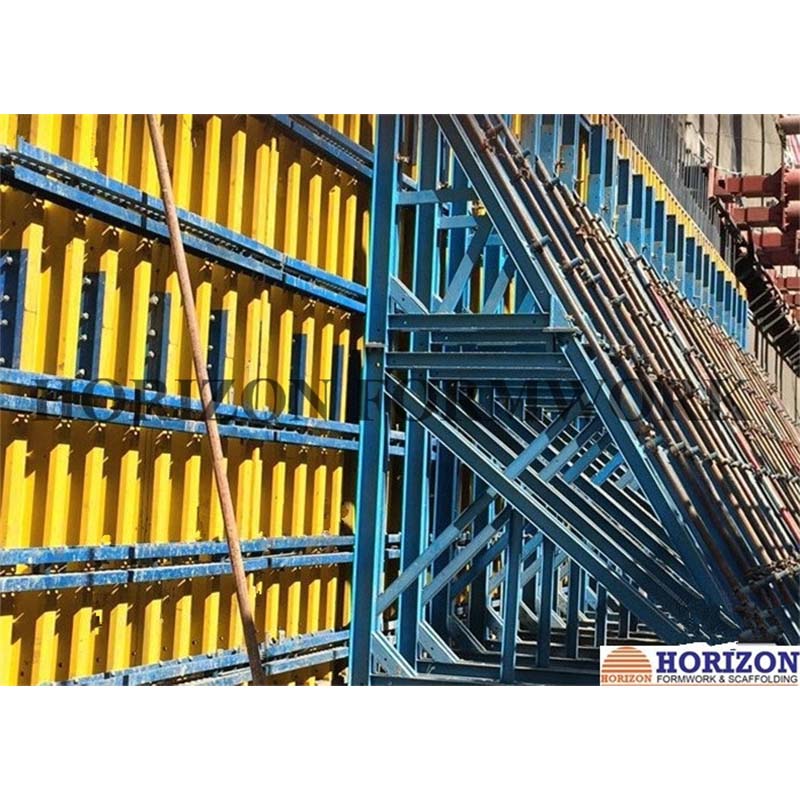
Origin: Hustpark Building No. 4, Zhongxing East Street, Xingtai, Hebei, China. HORIZON’s bracket set locks together cleanly; the adjustable standard frame is handy when you’re chasing varying wall heights. In fact, the system pairs with either steel panels or plywood-faced panels, depending on the finish you want and what’s on your yard.
| Spec (typical) | Details (≈, real-world use may vary) |
|---|---|
| Max system height | Up to 8.9 m |
| Lateral pressure capacity | ≈ 60–80 kN/m² (setup, mix temp, and rate-of-rise dependent) |
| Anchor line capacity | ≈ 30–50 kN per anchor line (verify with pull tests) |
| Steel grade | Q235/Q345 or comparable S235/S355 |
| Panel compatibility | Steel panels or 12–21 mm plywood-faced panels |
| Finish options | Industrial paint; hot-dip galvanizing optional |
| Service life | ≈ 8–12 years with maintenance (coating touch-ups, anchor inspection) |
| Core components | Base frame, lower frame, upper frame, standard frame |
Where it shines
- Basements and retaining walls in tight property lines (no room for ties through).
- Water tanks, lift shafts, culverts, abutments—any pour with access on one side.
- High-rate pours with cooler mixes; adjust rate-of-rise if temperature spikes.
Process flow, testing, and documentation
Materials: welded structural steel (CO₂-shielded), machined anchor plates, factory jigs. Methods: pre-assembly checks, torque marks, and site pull tests. Testing standards typically reference EN 12812 falsework load testing and ACI 347 guidance on lateral pressure; for steel grades, GB/T 700 and GB/T 1591 are common. On a good day, you’ll see ≤ L/400 visible deflection under service load in trial setups. Always request a pressure-rate chart and anchor spacing schedule. Certifications often include ISO 9001 and, where required, CE marking docs for related components.
| Vendor | Height range | Lead time | Customization | Docs & testing |
|---|---|---|---|---|
| HORIZON | Up to 8.9 m | ≈ 2–4 weeks ex-works | Anchor spacing, finish, panel interface | Load charts, pull-test protocol, ISO docs |
| Vendor A (generic) | 6–9 m | 4–6 weeks | Limited | Basic drawings |
| Vendor B (generic) | Up to 8 m | Stock-dependent | Good | EN/ACI references; limited test data |
Customization that actually helps
Ask for: alternative anchor diameters (M20/M24), hot-dip galvanizing for coastal jobs, and pre-drilled interfaces for your panel system. For tall lifts, I guess an extra bracing tier is worth the tiny cost—contractors keep telling me it pays off in pour confidence.
Case snippets
- Metro station box, 7.5 m wall: crew ran ≈ 1.5 m/h with temperature-managed mix; anchor pull tests averaged 42 kN before pour—no issues reported.
- Reservoir retaining wall, 6.2 m: mixed plywood/steel panels; observed face flatness within 4–6 mm over 3 m (after grinding ties, obviously).
Final tip: document your rate-of-rise, concrete temp, and anchor layout per bay. It sounds fussy, but it’s what separates a smooth pour from a long night. The China Single Sided Wall Formwork systems are robust—use the paperwork to your advantage.
Standards and references
- ACI 347.3R & ACI 347 – Guide to Formwork for Concrete.
- EN 12812 – Falsework – Performance requirements and general design.
- GB/T 700 & GB/T 1591 – Structural steel specifications (Q235/Q345).
- GB 50204 – Code for Acceptance of Construction Quality of Concrete Structures.
-
OEM Pipe Shuttering: Efficient, Durable Solutions for Global Construction
NewsDec.03,2025
-
OEM A-Frame Scaffolding: Durable & Safe Solutions for Global Construction Needs
NewsDec.03,2025
-
OEM Formwork and Scaffolding: Essential Solutions for Global Construction Efficiency
NewsDec.03,2025
-
OEM Quick Industrial Scaffolding: Fast, Safe, and Sustainable Solutions for Modern Industry
NewsDec.02,2025
-
What is OEM Permanent Formwork for Suspended Slabs? Benefits & Global Insights
NewsDec.02,2025
-
OEM Plastic Formworks for Concrete: Durable, Eco-friendly Solutions for Modern Construction
NewsDec.02,2025
 Afrikaans
 Albanian
 Amharic
 Arabic
 Armenian
 Azerbaijani
 Basque
 Belarusian
 Bengali
 Bosnian
 Bulgarian
 Catalan
 Cebuano
 Corsican
 Croatian
 Czech
Czech
 Danish
 Dutch
Dutch
 Esperanto
 Estonian
 Finnish
 French
 Frisian
 Galician
 Georgian
 German
 Greek
Greek
 Gujarati
 Haitian Creole
 Hausa
Hausa
 Hawaiian
 Hebrew
 Hindi
Hindi
 Miao
Miao
 Hungarian
 Icelandic
 Igbo
Igbo
 Indonesian
 Irish
Irish
 Italian
 Japanese
 Javanese
 Kannada
 Kazakh
 Khmer
Khmer
 Rwandese
 Korean
 Kurdish
 Kyrgyz
 Lao
Lao
 Latin
Latin
 Latvian
 Lithuanian
 Luxembourgish
 Macedonian
 Malgashi
 Malay
Malay
 Malayalam
 Maltese
 Maori
Maori
 Marathi
 Mongolian
 Myanmar
 Nepali
 Norwegian
 Norwegian
 Occitan
 Pashto
 Persian
 Polish
 Portuguese
 Punjabi
 Romanian
 Russian
 Samoan
 Scottish Gaelic
 Serbian
 Sesotho
 Shona
Shona
 Sindhi
 Sinhala
 Slovak
 Slovenian
 Somali
 Spanish
 Sundanese
 Swahili
 Swedish
 Tagalog
 Tajik
Tajik
 Tamil
Tamil
 Tatar
Tatar
 Telugu
 Thai
Thai
 Turkish
 Turkmen
 Ukrainian
 Urdu
Urdu
 Uighur
 Uzbek
Uzbek
 Vietnamese
 Welsh
Welsh
 Bantu
Bantu
 Yiddish
 Yoruba
 Zulu
Zulu
 English