Fev . 25, 2026 14:48 Back to list
The Ultimate Guide to Shoring Props: Types, Sizes, and Applications
In the demanding world of modern construction, structural integrity during the building phase is the most critical factor for ensuring worker safety and project success. Among the most indispensable tools found on any job site is the shoring prop, a versatile vertical support system designed to manage temporary loads. Whether you are working on a residential renovation or a massive commercial development, understanding the nuances of shoring and propping is essential for maintaining a stable environment. These devices provide the necessary skeletal support that prevents collapses while concrete is being poured or while structural modifications are being made to existing buildings.
The fundamental purpose of a prop is to transfer weight from a superior surface down to a stable base. This process, often referred to as propping and shoring, involves the strategic placement of metal posts to hold up beams, ceilings, or formwork. The beauty of the modern shoring system lies in its simplicity and its incredible capacity for load distribution. By using high-grade materials and precision engineering, these tools allow builders to defy gravity temporarily, creating a safe window of time for permanent structures to cure and gain their own strength.
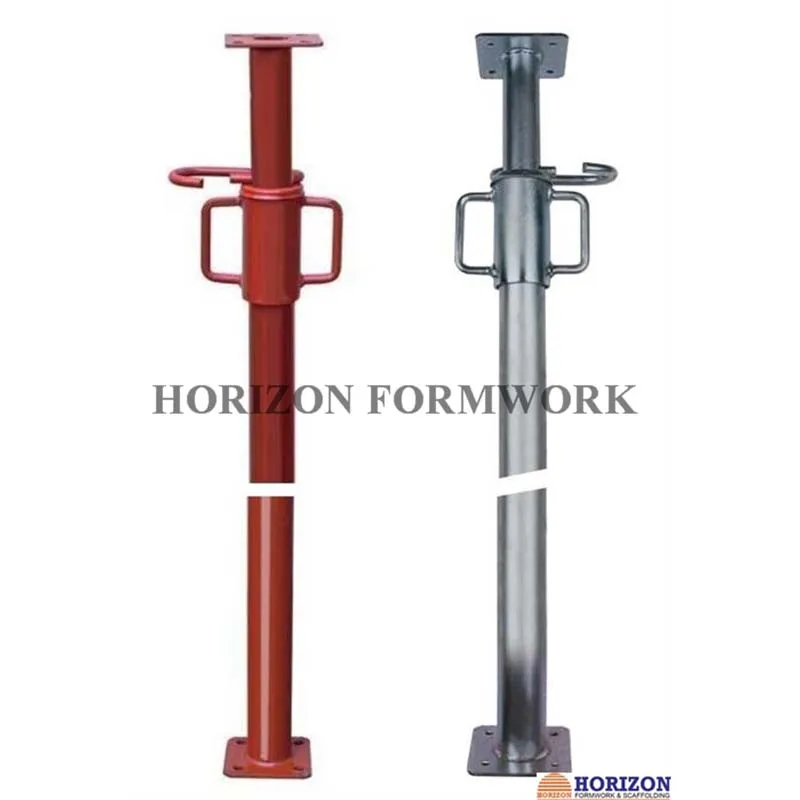
Versatility in Height with the Telescopic Shoring Prop
One of the most significant innovations in the history of construction hardware is the development of the telescopic shoring prop. Traditional timber supports were limited by fixed lengths, requiring time-consuming cutting and wedging to fit specific ceiling heights. The telescopic design revolutionized this by featuring an inner and outer tube system that allows the post to extend or retract to the exact millimetre required. This adaptability makes it an essential asset for projects with varying floor-to-ceiling heights, as a single set of props can be reused across different levels of a multi-storey building.
The mechanism behind a telescopic system is both robust and intuitive. An inner tube slides within an outer tube and is secured at a rough height using a high-strength steel pin. Fine adjustments are then made using a threaded collar, which allows the user to tighten the prop against the load with extreme precision. This dual-stage adjustment ensures that the shoring and propping process is not only fast but also incredibly secure. Because these props are manufactured from high-tensile steel, they offer a high strength-to-weight ratio, allowing workers to manually position them without the need for heavy machinery, thereby increasing the efficiency of the entire construction cycle.
Precision Engineering of the Adjustable Shoring Prop
In the context of complex architectural designs, "close enough" is never sufficient for structural support. This is why the adjustable shoring prop has become the industry standard for precision work. The threaded adjustment sleeve is the heart of the prop, allowing for minute changes in height even after the prop has been placed in an upright position. This is particularly vital when leveling formwork for large concrete slabs, where even a slight deviation in height could result in an uneven floor or structural weaknesses in the finished building.
The adjustability of these props also plays a crucial role in the safety of the dismantling process. Once a concrete slab has reached its required strength, the props must be removed. By utilizing the adjustable threaded collar, workers can slowly and safely "strike" or lower the prop, releasing the tension in a controlled manner. This prevents the sudden shifts in weight that can lead to accidents. Whether used in light construction shoring props or heavy-duty industrial applications, the ability to fine-tune the vertical pressure is the primary reason why steel props have entirely replaced older, less reliable methods of temporary support.
Structural Support with Steel Prop Shoring Posts
When it comes to durability and long-term reliability, steel prop shoring posts are unrivaled. Unlike wood, which can rot, warp, or crack under intense pressure or humidity, steel remains dimensionally stable regardless of the environment. Most modern steel props are treated with either a high-visibility powder coating or a hot-dipped galvanized finish. This treatment is essential for preventing corrosion, especially on sites where the equipment is exposed to rain, wet concrete, and the abrasive dust common in construction zones.
The physical presence of a steel prop provides a psychological sense of security to the crew working beneath it. These posts are designed with large top and bottom plates that help distribute the load over a wider area, preventing the prop from sinking into the ground or damaging the surface it is supporting. In the realm of propping and shoring, the rigidity of steel ensures that there is minimal deflection under load. This means that the structural calculations made by engineers can be executed with a high degree of confidence, knowing that the temporary supports will behave exactly as predicted under the weight of wet concrete and reinforcing steel.
Optimizing Concrete Pours Using a Shoring Prop for Slab Formwork
The most common application for these tools in modern high-rise construction is the use of a shoring prop for slab formwork. When a new floor is being cast, the weight of the liquid concrete is immense. The formwork—usually a combination of plywood panels and timber or metal beams—must be held perfectly still until the concrete hardens. The shoring props are placed in a dense grid pattern beneath the formwork, creating a temporary forest of steel that carries the weight of the new floor down to the hardened floor below.
This application requires a deep understanding of load paths. Engineers must determine the exact spacing of each shoring prop to ensure that no single post is overloaded. The use of props in slab formwork also allows for the "back-propping" technique, where supports are left in place for several levels below the current pour to distribute the massive weight across multiple finished floors. This sophisticated approach to temporary support is what allows modern skyscrapers to be built at such an incredible pace, ensuring that the integrity of the entire building is never compromised during the most vulnerable stages of its creation.
This is the last article
-
The Ultimate Guide to Shoring Props: Types, Sizes, and Applications
YangiliklarFeb.25,2026
-
The Role of Shoring Props in Historical Building Restoration and Renovation
YangiliklarFeb.25,2026
-
The Importance of Regular Maintenance and Inspection for Shoring Systems
YangiliklarFeb.25,2026
-
Temporary Support Solutions: Using Shoring Props for Emergency Structural Repair
YangiliklarFeb.25,2026
-
Steel vs. Aluminum Shoring Props: Which One Should You Choose?
YangiliklarFeb.25,2026
-
Shoring Props in Trenching: Ensuring Worker Safety in Excavation Projects
YangiliklarFeb.25,2026