Feb . 25, 2026 14:40 Back to list
Temporary Support Solutions: Using Shoring Props for Emergency Structural Repair
When a structural emergency occurs—whether due to an unexpected seismic event, a vehicular impact, or the sudden failure of aging building materials—the clock starts ticking immediately. The primary objective in any structural crisis is to stabilize the environment to prevent further collapse and protect both occupants and first responders. In these high-pressure scenarios, the shoring prop is the most critical tool for providing immediate, reliable vertical support. Known for their rapid deployment and immense load-bearing capacity, these metal posts act as the "first responders" of the construction world, offering a temporary lifeline to buildings on the verge of failure.
The process of propping and shoring in an emergency context requires a blend of speed and engineering precision. Unlike a planned construction site where loads are pre-calculated, emergency repairs often involve unknown variables and shifting masses. This is where the inherent strength of modern steel supports becomes invaluable. By creating a temporary load path, a single shoring prop can buy enough time for engineers to assess the damage and for specialized crews to implement permanent structural reinforcements.
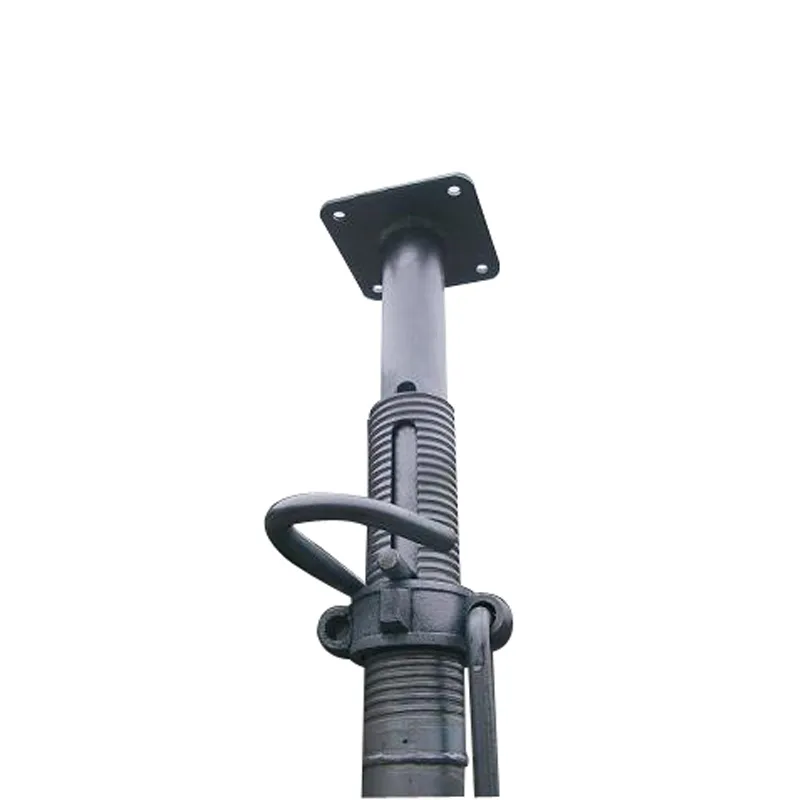
Rapid Stabilization with the Telescopic Shoring Prop
In a rescue or emergency repair situation, every second saved in the setup of equipment can prevent a secondary disaster. The telescopic shoring prop is uniquely designed for this type of rapid mobilization. Featuring a nested tube design, these props can be carried manually into damaged areas where heavy machinery cannot go. Once in position, the inner tube is quickly extended to meet the sagging ceiling or beam, secured with a high-strength pin, and then tightened to the final required tension.
The versatility of the telescopic mechanism is particularly useful when dealing with debris-strewn environments or uneven floors caused by structural settling. Because the telescopic shoring prop can be adjusted to various heights in seconds, it allows emergency teams to secure a wide range of structural voids—from low-clearance residential basements to high-ceilinged industrial warehouses. This speed of deployment is why many fire departments and urban search-and-rescue (USAR) teams keep a fleet of these props in their emergency vehicles, ready to be deployed the moment they arrive at a compromised site.
Precision Tensioning via the Adjustable Shoring Prop
After the initial extension of the prop, the focus shifts to "taking the load"—the delicate process of applying enough upward pressure to stop a structure from moving without causing additional stress cracks. This is achieved through the adjustable shoring prop screw mechanism. The threaded sleeve allows a technician to apply millimetric adjustments to the height of the post. In a damaged building, where a floor may be sagging under the weight of an upper-story collapse, the ability to fine-tune the tension is the difference between successful stabilization and a catastrophic shift in weight.
The adjustable shoring prop also provides a safety margin during the "monitoring" phase of a repair. As the building settles or as workers remove damaged debris, the load on the props can change. The threaded collar allows for constant recalibration, ensuring the support remains tight even if the surrounding structure shifts slightly. This level of control is essential in shoring and propping operations where the structural integrity of the building is in a state of flux. By providing a mechanical advantage, the screw thread allows a single operator to exert tons of force with a simple turn of a handle, effectively counteracting the gravity that threatens to bring the building down.
Structural Reliability of Steel Prop Shoring Posts
In an emergency, there is no room for material failure. This is why steel prop shoring posts are the global standard for emergency structural repair. Steel provides a predictable, high-strength response to compressive forces that other materials, such as timber, simply cannot match. A wood beam might splinter or bow under a sudden shift in load, but a steel post remains rigid. This predictability is vital for engineers who must calculate whether a compromised floor can safely support the weight of rescue personnel or heavy shoring equipment.
Most professional steel prop shoring posts are hot-dipped galvanized or finished with high-visibility powder coating. In emergency scenes—which are often dark, wet, or filled with dust—the durability and visibility of these posts are significant safety factors. Furthermore, steel's resistance to fire and heat ensures that the supports will not fail even if the structural emergency involves an active fire. When search-and-rescue teams look for shoring props for sale, they prioritize these heavy-duty steel models because they know that the life of the building—and the people inside—depends on the absolute reliability of the metal.
Specialized Support with the Adjustable U Shaped Shoring Prop
Structural failures often involve the compromise of horizontal beams or "needles" that have been inserted to bridge a gap in a damaged wall. To secure these horizontal members safely, the adjustable u shaped shoring prop is the tool of choice. The "U" head (or fork-head) at the top of the prop acts as a cradle, preventing the beam from rolling or slipping off the vertical support. In an emergency where a load-bearing column has been destroyed, a temporary beam is often used to span the gap, and the U-head prop ensures that this beam stays exactly where it belongs.
The security of the adjustable u shaped shoring prop is particularly important in environments subject to vibration, such as sites where heavy demolition equipment is working nearby or where there is significant wind or seismic aftershock. By physically containing the horizontal load-bearing member, the U-head eliminates the risk of lateral displacement. This is a core component of the "safety-first" philosophy in propping and shoring, ensuring that the temporary system is not only strong enough to hold the weight but also stable enough to handle the unpredictable movements of a compromised environment.
-
The Ultimate Guide to Shoring Props: Types, Sizes, and Applications
NewsFeb.25,2026
-
The Role of Shoring Props in Historical Building Restoration and Renovation
NewsFeb.25,2026
-
The Importance of Regular Maintenance and Inspection for Shoring Systems
NewsFeb.25,2026
-
Temporary Support Solutions: Using Shoring Props for Emergency Structural Repair
NewsFeb.25,2026
-
Steel vs. Aluminum Shoring Props: Which One Should You Choose?
NewsFeb.25,2026
-
Shoring Props in Trenching: Ensuring Worker Safety in Excavation Projects
NewsFeb.25,2026